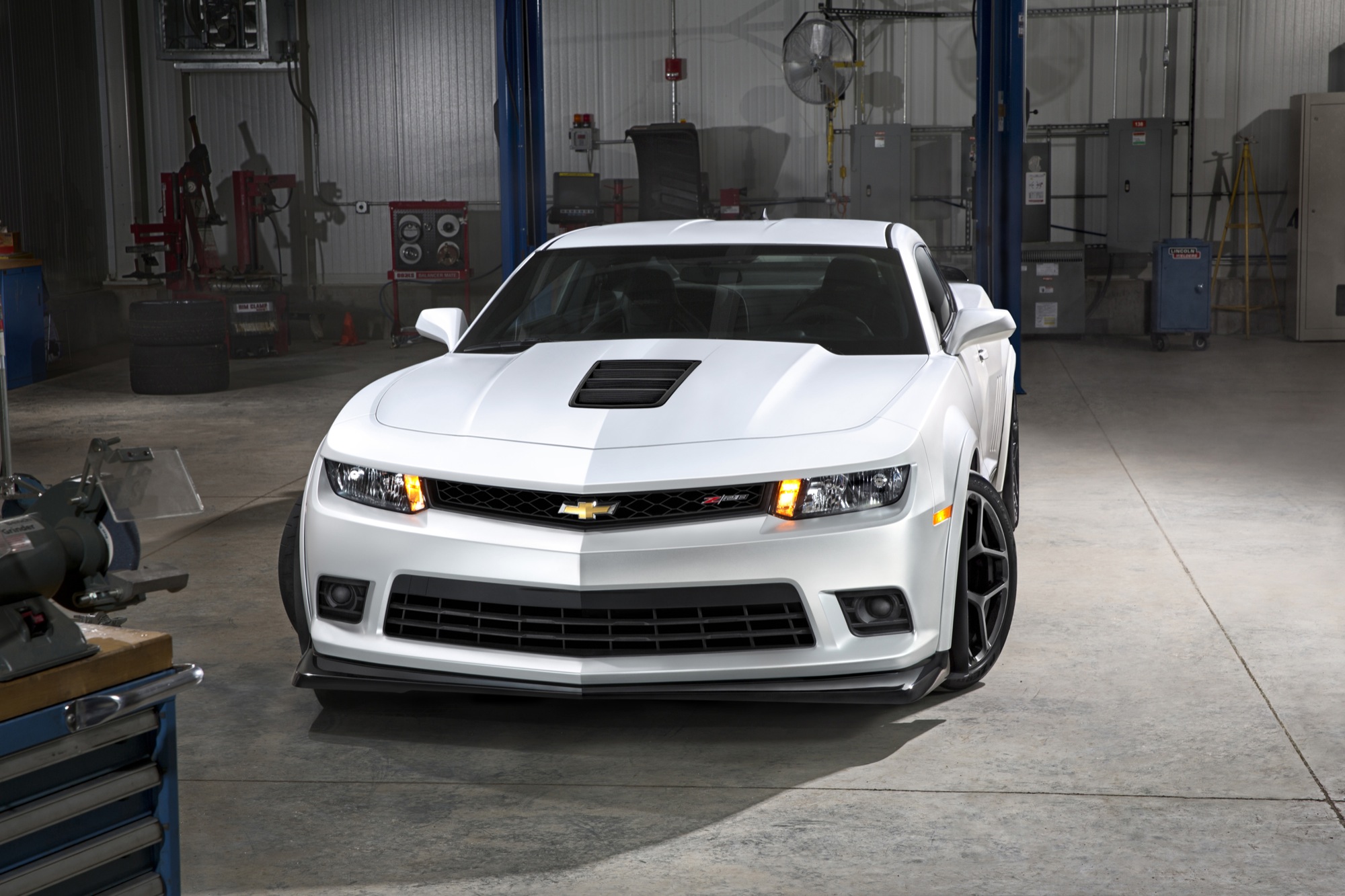
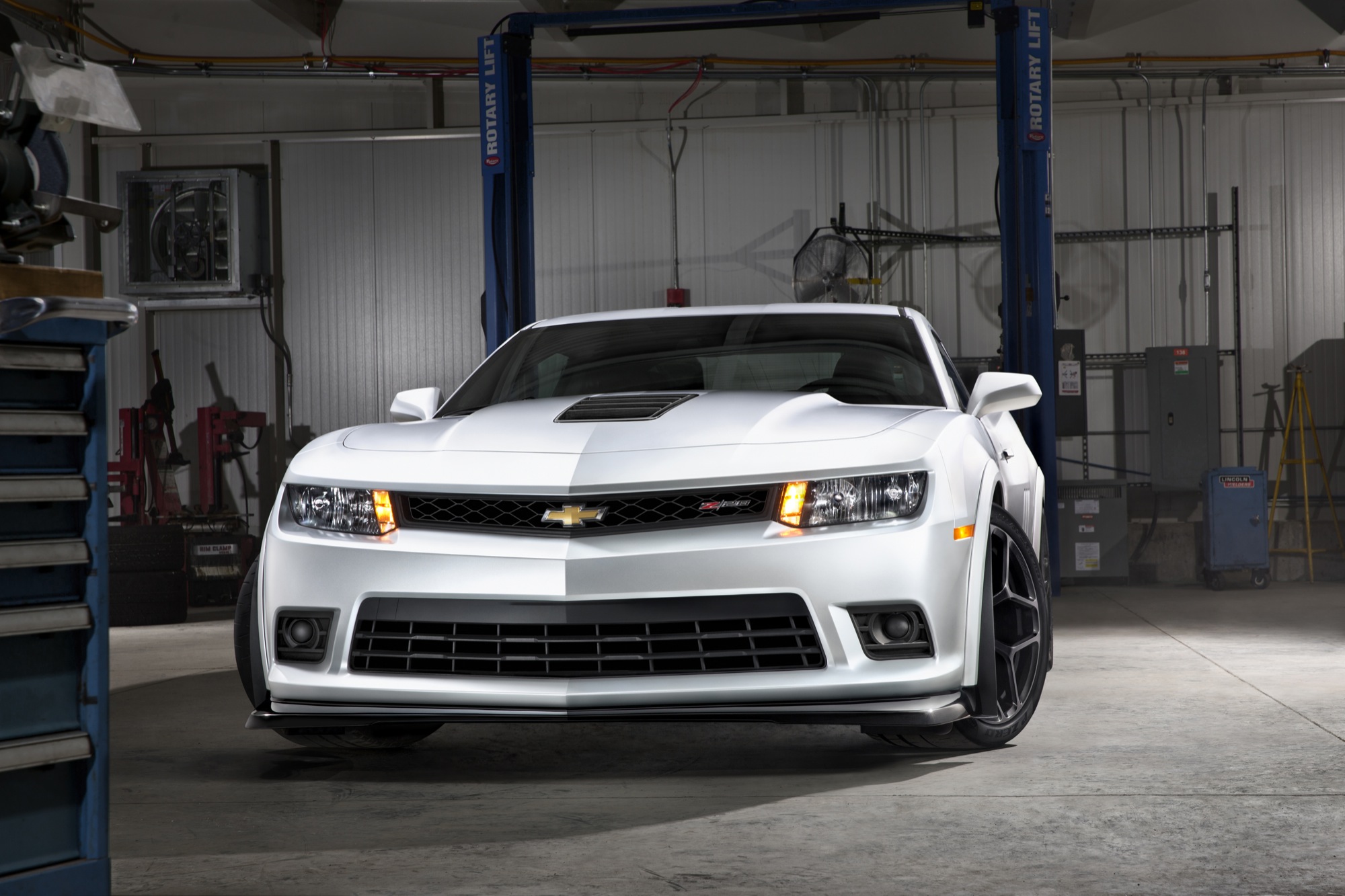
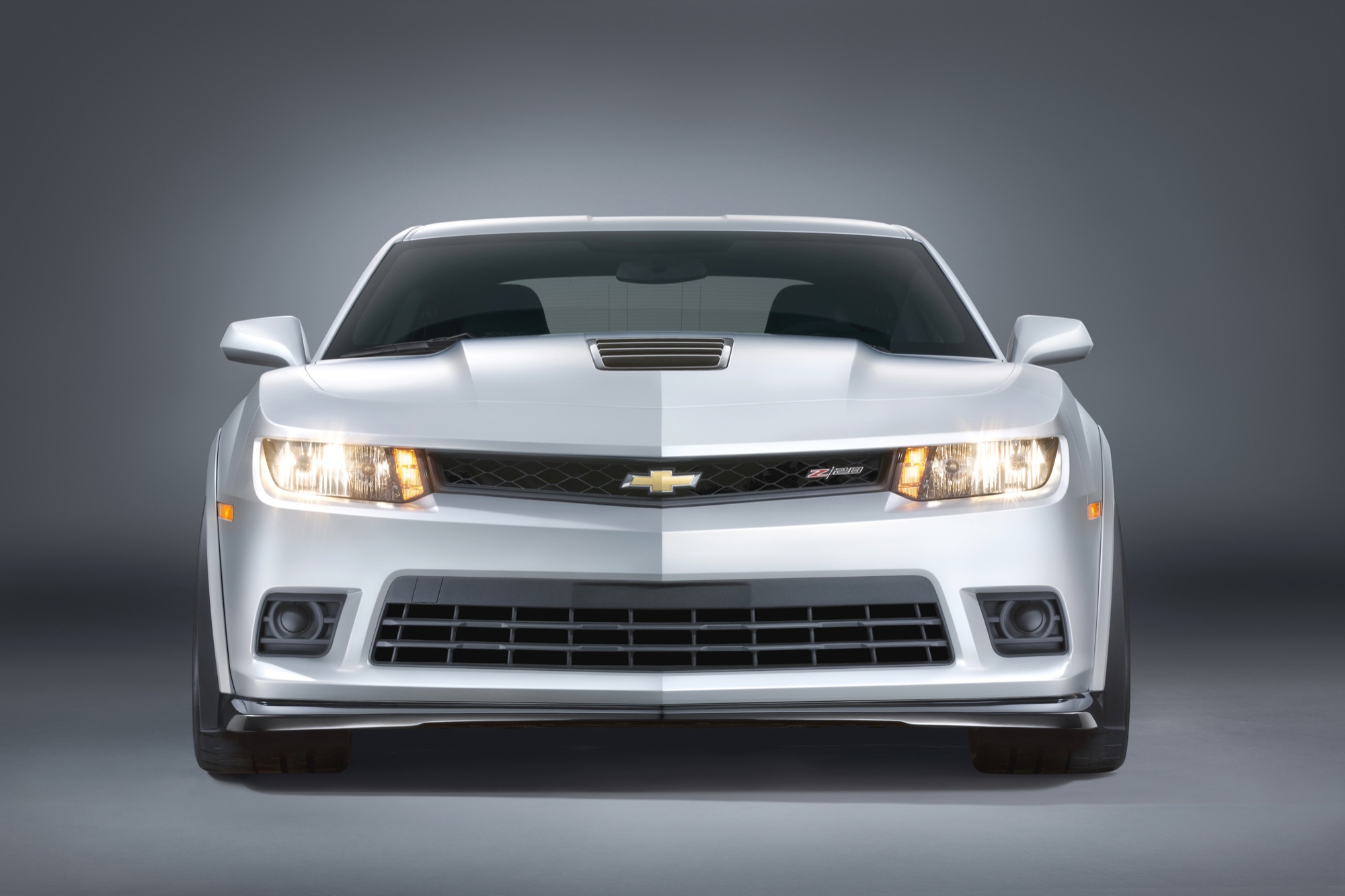
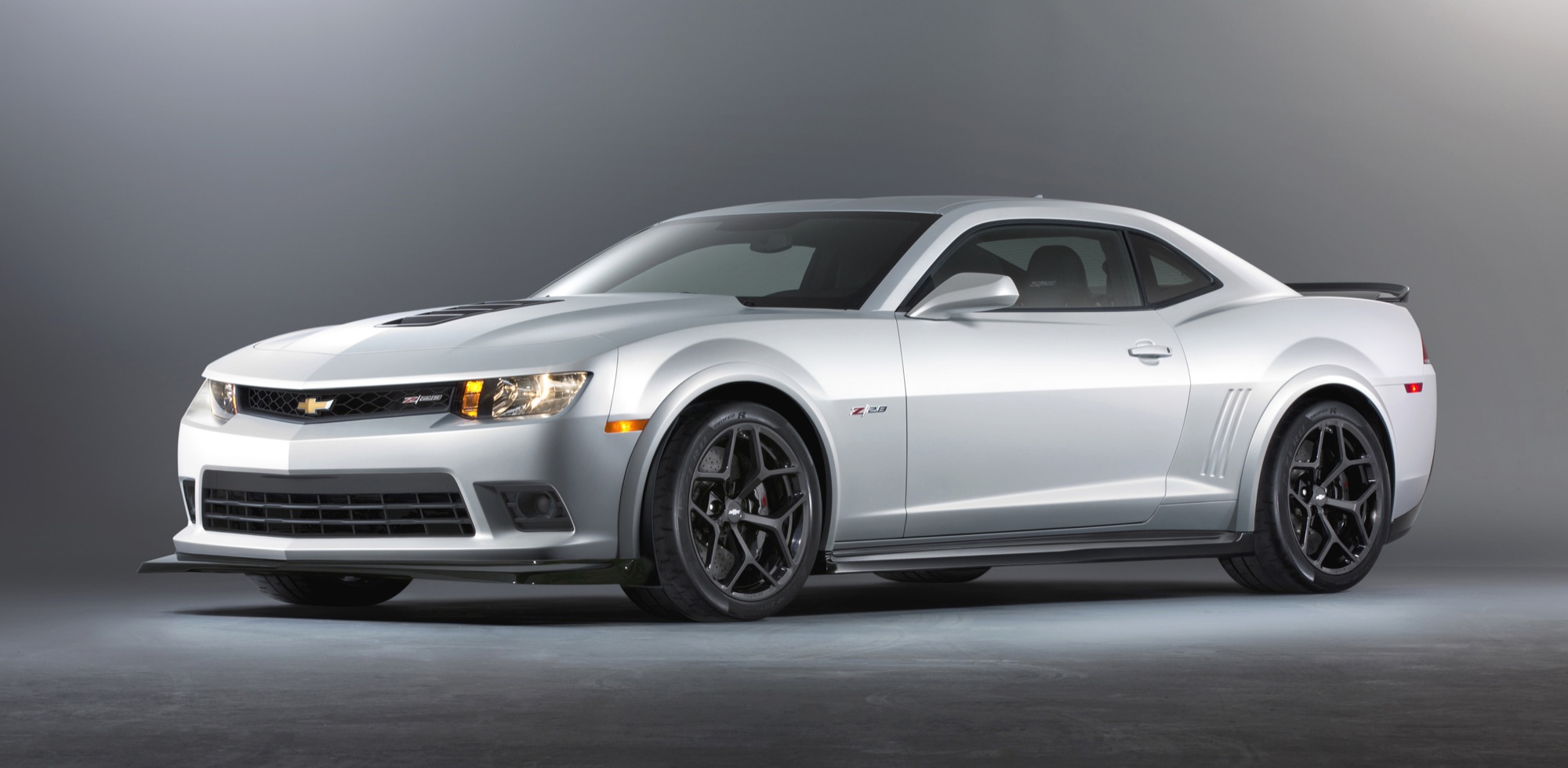
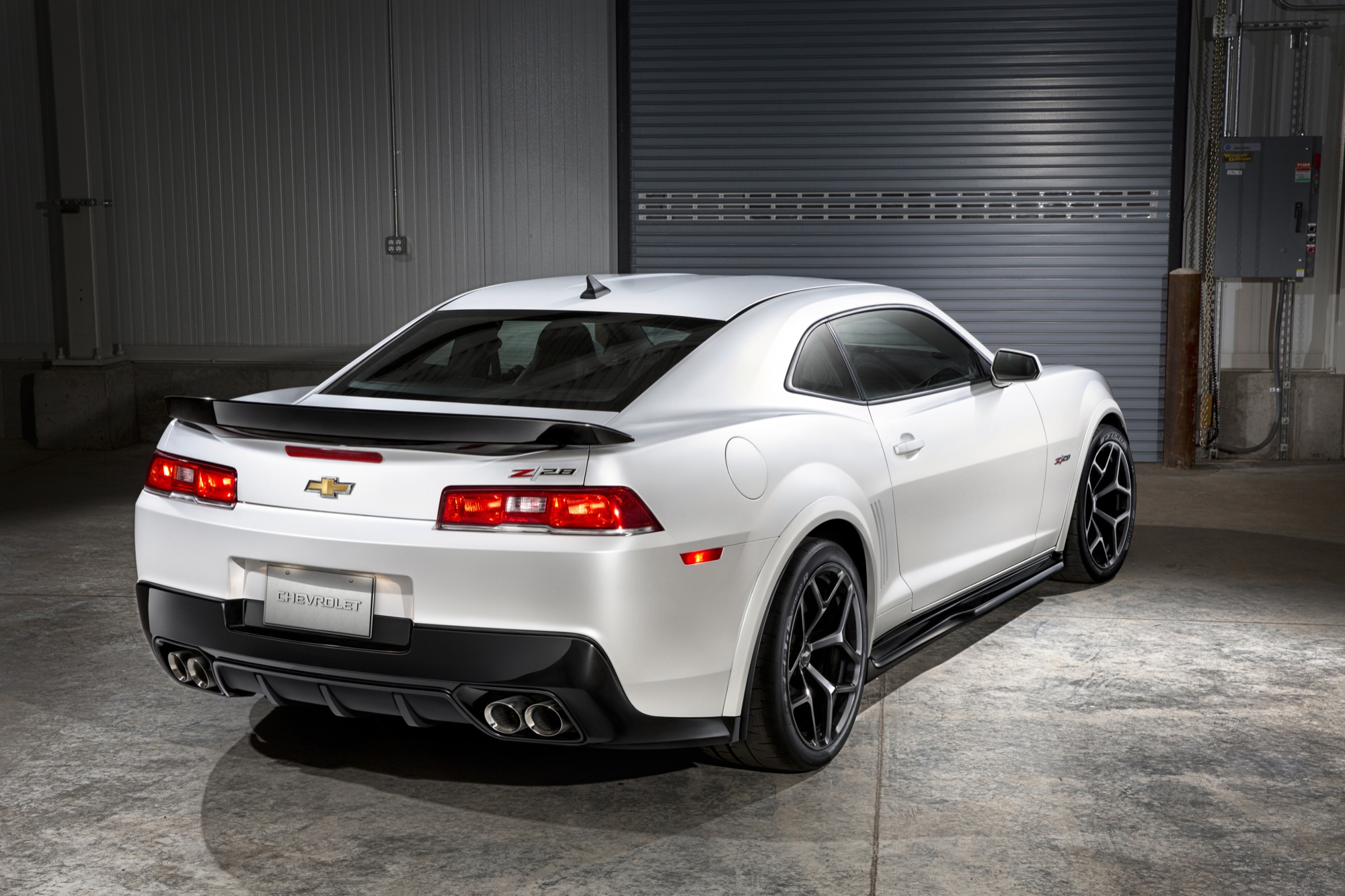
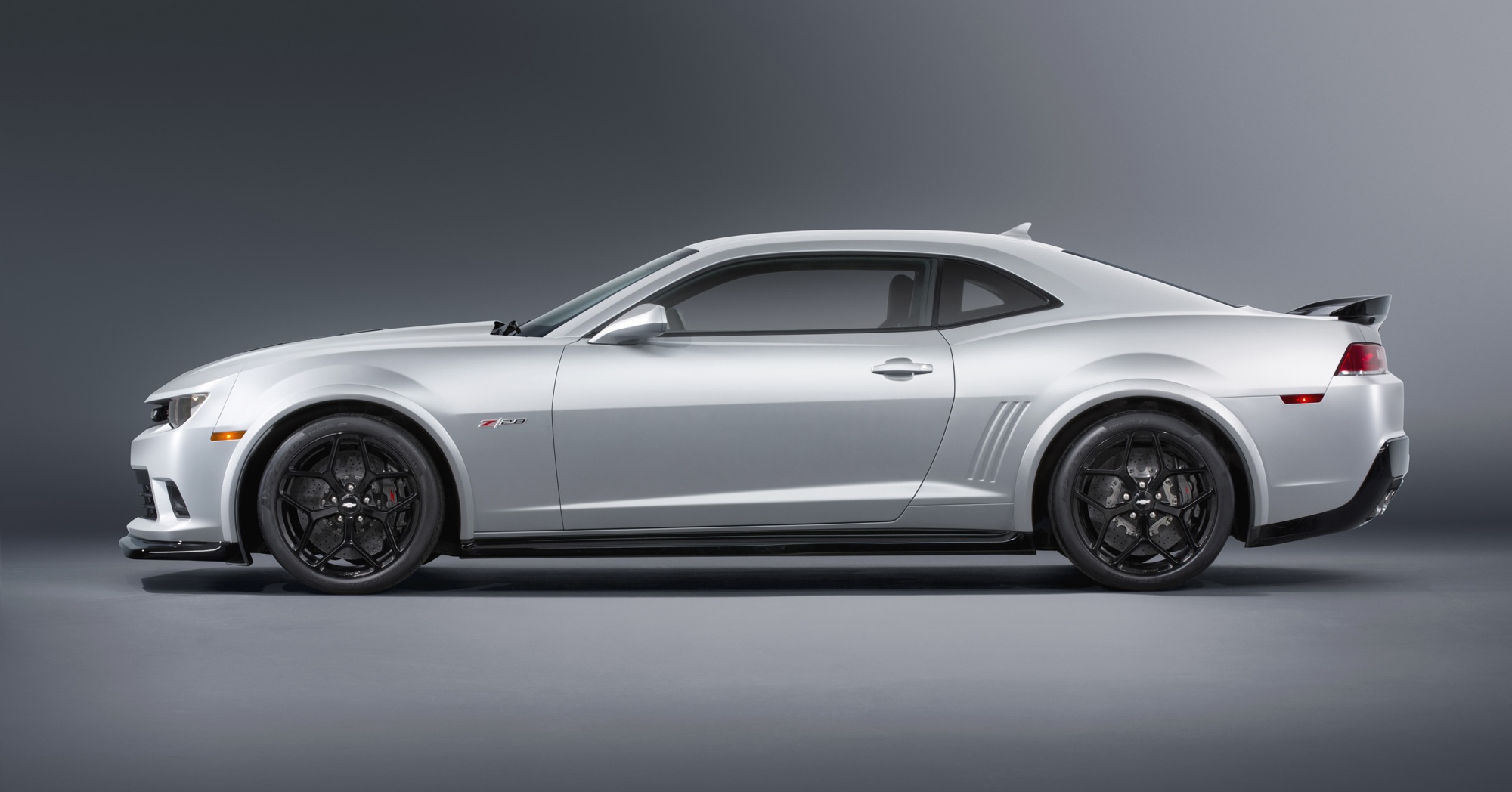
NEW YORK – Chevrolet today introduced the restyled 2014 Camaro line at the New York Auto Show, including the return of the Z/28, the most iconic model in Camaro history.
The 2014 Camaro models feature a revised exterior design that integrates high-performance aerodynamics for more efficient cooling and stability at high speeds. The new Camaro Z/28 also features a full aerodynamics package that creates downforce at speed, which helps make it the most track-capable offering in Camaro’s history.
“As the ultimate track-capable Camaro, this car restores the mission of the original Z/28, and serves as a testament to the expertise of Chevrolet as the best-selling brand of performance cars,” said Mark Reuss, president, GM North America. “The build sheet is the wish list of any racer: lightweight, high-revving, dry-sump LS7 engine; carbon-ceramic brakes; integrated coolers for track use; true aerodynamic downforce, and a significant reduction in curb weight. This car could only come from Chevrolet, and could only be called the Z/28.”
The first Camaro Z/28 was introduced in 1967, created to compete in the Sports Car Club of America's Trans-Am 2 class. It featured a smaller, lighter, 302-cubic-inch V-8 for improved weight balance, as well as quick-ratio steering and a heavy-duty suspension for track use. In keeping with its road-racing focus, the 1967 Camaro Z/28 was not available with an automatic transmission or air conditioning.
While the new Camaro Z/28 is not intended to compete in a specific race series, it is solely focused on track capability. In initial testing, the Camaro Z/28 is three seconds faster per lap than the Camaro ZL1. That extra speed comes from three areas:
Increased grip: The Z/28 is capable of 1.05 g in cornering acceleration, due to comprehensive chassis revisions
Increased stopping power: the Z/28 features Brembo carbon-ceramic brakes capable of 1.5 g in deceleration, and consistent brake feel, lap after lap
Reduced curb weight: The naturally aspirated Z/28 weighs 300 pounds less than the supercharged Camaro ZL1, with changes ranging from lightweight wheels to thinner rear-window glass
Like the original, the 2014 Camaro Z/28 is offered only with a manual transmission. In a nod to modern convenience, air-conditioning is available, but only as an option.
"We set out to make the fastest road-racing Camaro possible that was still street-legal,” said Al Oppenheiser, Camaro chief engineer. “While the Camaro ZL1 offers exceptional performance on the street, the drag strip, and the track, the Z/28 is entirely focused on the track performance. The Z/28 will be too track-focused for most drivers, but offers road-racers one of the most capable track cars ever offered from an automaker.”
The new 2014 Camaro line will arrive at Chevrolet dealers later in 2013. The Camaro Z/28 is expected to be appearing at track events across the United States in spring 2014.
The racing-proven LS7 7.0L V-8 powers the all-new 2014 Camaro Z/28 – the most track-focused production model in the car’s history. It’s matched with a TREMEC TR6060 six-speed manual transmission with unique gearing tailored to the LS7’s performance characteristics for optimal track performance.
The Z/28 engine is adapted from the LS7 used in the C6 Corvette Z06, which was developed in conjunction with Corvette Racing. It is rated at an estimated 500 horsepower (373 kW) and 470 lb.-ft. of torque (637 Nm) in the new Camaro Z/28, with a maximum engine speed of 7,100 rpm – a broad rpm range that contributes to higher power and allows the driver to hold gears longer between shifts on the track. That helps keep the engine at peak power for quicker lap times.
“The LS7 lives on in the all-new Z/28, extending a performance legacy while delivering great power density in a lightweight package to give this exciting new Camaro a great feeling of control and balance,” said John Rydzewski, assistant chief engineer for small-block engines. “It introduced exotic materials and racing-influenced solutions that keep it at the forefront of high-performance technology.”
The LS7 is the most powerful naturally aspirated production engine ever from General Motors and, upon its launch in late 2005, was the first GM engine to receive SAE-certified power ratings.
“In the Camaro lineup, it complements a range of great V-8 choices, starting with the 426-horsepower LS3 in the Camaro SS and ending with the supercharged LSA rated at 580 horsepower in the Camaro ZL1,” said Rydzewski. “The LS7’s low mass and high rpm capability make it the perfect choice for the lightweight, track-capable Z/28, exemplifying all the strengths and attributes of the small-block architecture.”
Hand-assembled at GM’s Performance Build Center, in Wixom, Mich., the LS7 shares the basic Gen IV V-8 architecture as the Camaro SS’s 6.2L LS3 engine, but it uses a unique cylinder block casting with pressed-in steel cylinder liners to accommodate the engine’s larger diameter, 104.8mm cylinder bores – with deck-plate boring and honing for optimized bore geometry. It also uses a dry-sump oiling system to ensure full lubrication during the 1.05-g cornering loads the Z/28 is capable of producing.
Internally, the LS7’s reciprocating components use racing-derived lightweight technology, including titanium connecting rods and intake valves, to boost horsepower and rpm capability – and reduce overall engine mass. The titanium connecting rods provide perhaps the most direct link from the racetrack. They weigh just 464 grams apiece, almost 30 percent less than the rods in the LS3. Besides being lightweight, which enhances high-rpm performance and rpm range, titanium makes the rods extremely durable.
Additional engine highlight include:
Forged steel main bearing caps
Forged steel crankshaft
Titanium connecting rods with 101.6-mm stroke
Aluminum flat-top pistons
11.0:1 compression
High-lift camshaft
Racing-derived CNC-ported aluminum cylinder heads with titanium intake valves and sodium-filled exhaust valves
Hydroformed “tri-Y” exhaust manifolds
High-capacity, liquid-to-liquid oil cooling system
Unique cold-air induction system with low-restriction K&N air filter
Unique engine cover with “Camaro 427” identification.
The LS7 exhaust system for the Z/28 is unique and features a tri-Y header design to take advantage of the V-8’s firing order. Primary pipe pairings join cylinders one and five, then three and seven on the left bank, with cylinders two and four and six and eight paired on the right bank. At each bank, the primary pairings collect into a secondary Y, delivering a combination of pulse separation of adjacent firing cylinders and improved scavenging for the engine’s firing order of 1-8-7-2-6-5-4-3. A dual-mode exhaust system and large, three-inch-diameter pipes complement the manifolds’ tuning and low restriction. The optimized header and exhaust system improves torque and sound quality from the LS7 engine.
High-flow heads
The LS7’s CNC-ported aluminum cylinder heads are designed to meet the high airflow demands of the engine’s 7.0-liter displacement, as it ingests more than 100 cubic feet more air per minute than the LS3 V-8 – a nearly 20-percent increase in airflow. To process that airflow capability, a hydraulic roller camshaft with 15mm intake and exhaust valve lift is used to allow plenty of air to circulate in and out of the engine.
To ensure optimal, uninterrupted airflow, the LS7’s heads have straight, tunnel-like intake runners. Very large by production-vehicle standards – even racing standards – they are designed to maintain fast airflow velocity, providing excellent torque at low rpm and exhilarating horsepower at high rpm.
The heads feature 70cc combustion chambers that are fed by 56mm titanium intake valves, which are larger yet lighter than the valves in the LS3. They are partnered with 41mm sodium-filled exhaust valves, which feature hollow stems partially filled with a special sodium material that melts and liquefies around 205 degrees F (96 C). The inertia from the valves’ opening causes the liquefied sodium to move up inside the stem, dissipating heat better than a conventional exhaust valve.
To accommodate the large valve face diameters, the heads’ valve seats are Siamesed; and, taken from experience with the engines of Corvette race cars, the LS7’s valve angles are held at 12 degrees – vs. 15 degrees for the LS3 – to enhance airflow through the ports to get it into the combustions quicker and with less turbulence.
Dry-sump oiling system
A dry-sump oiling system is used with the LS7 and is designed to keep the engine fully lubricated during the high-cornering loads the Camaro Z/28 is capable of producing. A 10.5-quart reservoir delivers oil at a constant pressure to a conventional-style oil pump pick-up at the bottom of the engine. The pressurized oil feed keeps the oil pick-up continually immersed in oil at cornering loads exceeding 1.05 g.
Oil circulates through the engine and down to the oil pan, where it is sent back to the reservoir via a scavenge pump. The large-capacity reservoir, combined with a high efficiency air-to-oil cooler, provides necessary engine oil cooling under the demands of the engine’s power output. With the dry-sump system, oil is added to the engine via the reservoir tank – which includes the oil level dipstick.
Then and now
The engine in the original 1967 Z/28 was a 302-cubic-inch (4.9L) small-block rated at 290 horsepower and 290 lb-ft of torque. It was created by marrying the iron cylinder block of Chevrolet’s 283 V-8, which had 4.00-inch bores, with the crankshaft of the larger-displacement 327 engine, which delivered a 3.00-inch stroke, creating the 302-cubic-inch displacement that accommodated the engine-size regulation for SCCA’s Trans Am-2 class.
With its aluminum cylinder block and heads, as well as a composite intake manifold – and no heavy carburetor – the LS7 engine in the 2014 Camaro Z/28 weighs approximately 20 percent less and produces nearly 73 percent more horsepower than the 1967 302 engine.