Hey guys, my names Spencer, I work for LSi, the makers of Hot Shot's Secret. We purchased the Frantz Filter from the Frantz family in 2014. Since then, we have designed two new kinds of filter media, improved the design of the base plate and developed aluminum caps for returning the oil to keep you from having to drill and tap into your engine.
A fear for many is deterioration of the filter, and the thought of toilet paper flowing through your engine is enough to give most guys nightmares. While in the past our filters used toilet paper, and we have never had the toilet paper deteriorate in any cases we observed, we do not recommend the use of toilet paper as it does not provide the quality filtration that our media does today. In fact, most OEM filters to this day are nothing more than thin cardboard or colored coffee filter material. The longer OEM filters are used and the more particles they catch, the less they filter. Most pressurized lubrication systems incorporate an overpressure relief valve built into the filter to allow oil to bypass the filter altogether if its flow restriction is excessive (either filter is clogged or cold weather is thickening oil), to protect the engine from oil starvation. The spring inside allows more and more oil to pass through until it does not filter at all.
We created a cellulose and synthetic media, which removes any need for concern of deterioration. It works great in diesel and gasoline engines; and we've had great success with cars, trucks, planes, generators, agricultural and industrial applications.
To help answer Firebob's question, "What micron size would offer adequate protection? 21 microns sound ok?"
A human hair is roughly 75 microns in diameter, with that in mind, engines have incredibly small clearances in a couple places, like between bearings, and taken from one of our competitors: "engine oil flows between wear-sensitive surfaces that usually have clearances between 2 and 22 microns. It is contaminants in this size range that pose the greatest threat as they can slip between moving components, causing a great deal of wear."
Here's test results taken from a third party, they ran oil for 4,700 miles with just the OEM filter, then installed a Frantz with that same oil and ran it for 200 miles, then we sampled brand new oil. That brand new oil we tested would cause more wear to your engine than the 5,000 mile old oil, that's some serious protection! If youre not one for pretty pictures we have the results as a pdf here:
http://www.frantzfilters.com/wp-cont...ntzResults.pdf
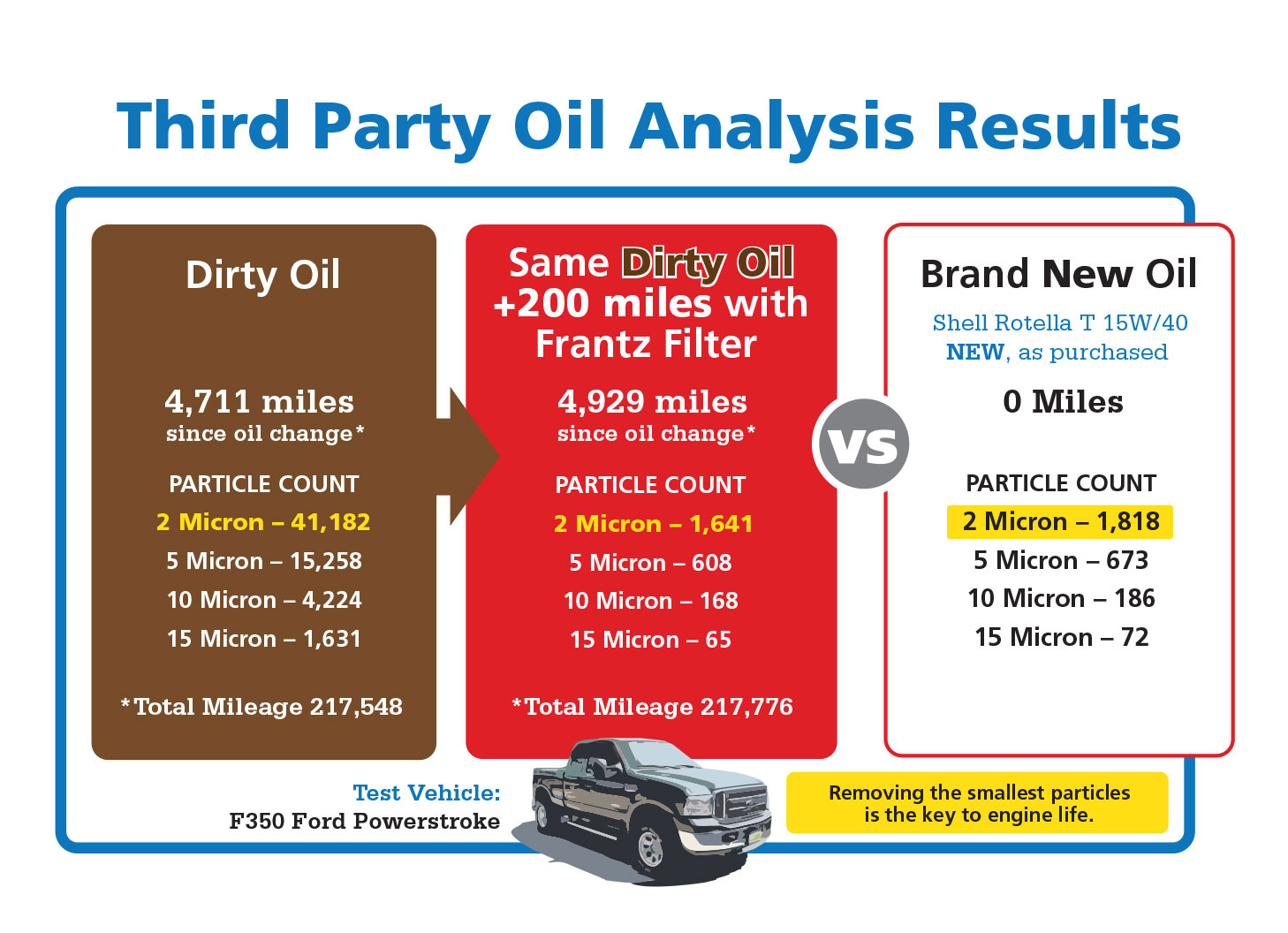
Frantz Filters remove carbon soot, gum residues, water, abrasives, and small metal pieces without degrading the detergents and additives in the oil. Obviously diesel engines are harsher on the engine oil and get a lot dirtier, but the filters work great on gasoline engines, and I'd highly recommend one to someone who wants to protect the investment of a new or rebuilt engine. Theyve been around since 1953 so they dont look out of place on the old classics! Our salesman Don installed one on his AMC Rambler earlier in the fall and took it to a car show and alot of guys remembered the Frantz name. Bo is our ASE Master Tech, and Mike is the Frantz Brand Manager, our phone number is 1-800-341-6516 (toll free) if you have any questions. There's more info on
www.frantzfilters.com
Sorry for the book gentlemen, hope this information helps. I'll have to go check out the rest of the forum, Ive helped wrench on a friend's Road Runner, and my grandpa has a convertible Le Mans, definitely have a soft spot for Pontiacs. Happy motoring fellas!