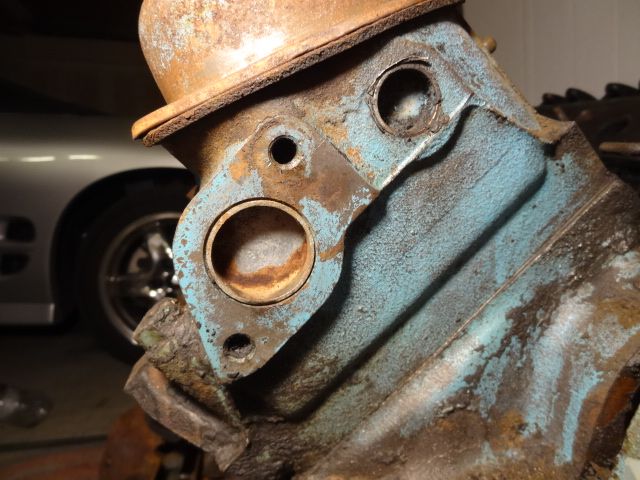
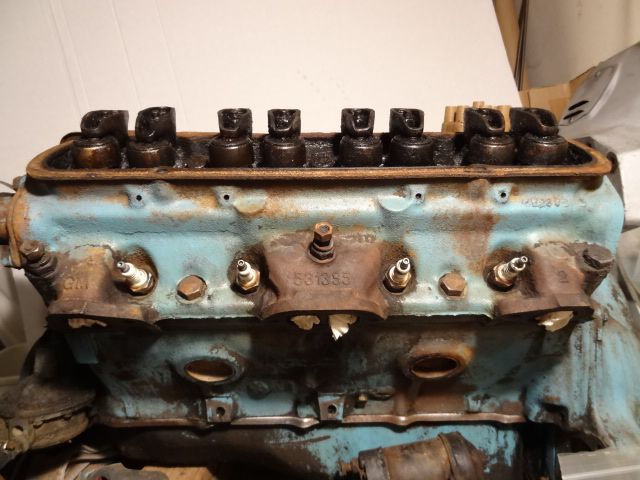
Here's a closer look at some of the unusual features of the casting # 531395 1959 heads, all 1959 engines used this head casting.
Valve sizes are 1.88" intake and 1.60" exhaust.
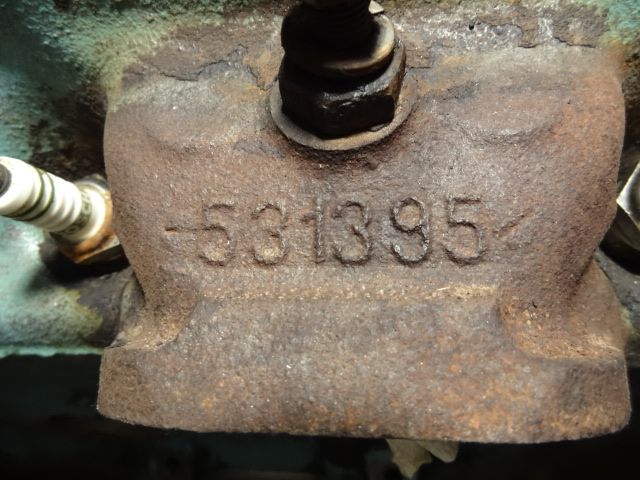
The intake and exhaust crossover port placement is exactly the same as the 1961 - 1964 heads. The bolt pattern is identical as well.
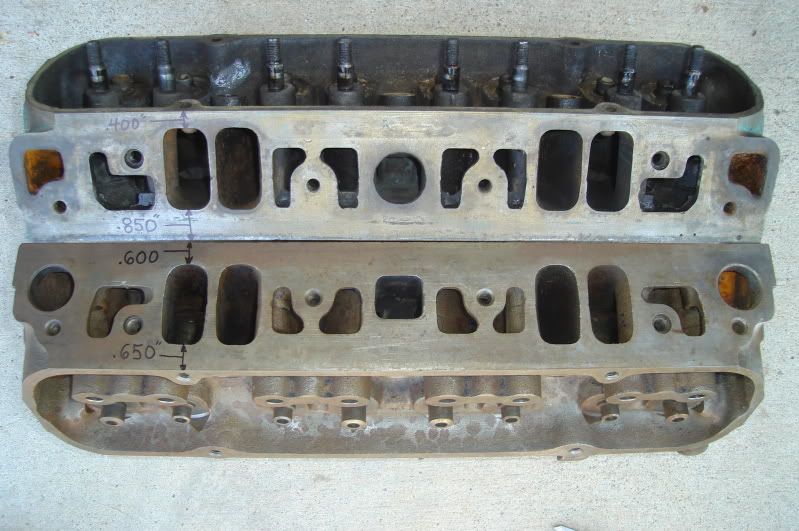
For the sake of intake and crossover port comparison, a 1964 9770716 389 head is pictured at the top, a 1970 #13 400 head below. Port entrance size is nearly identical between the two heads, 2.050" X 1.110" for 1964 and 2.070 X 1.100" in 1970.
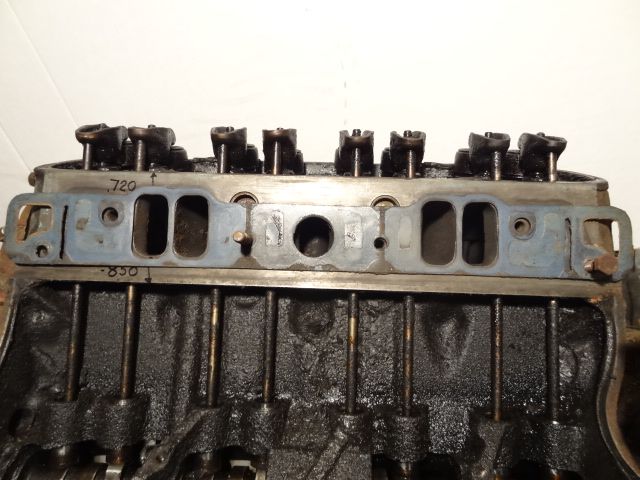
Here is a 1964 intake gasket laid over the 1959 head. As you can see the water ports are in a completely different location.
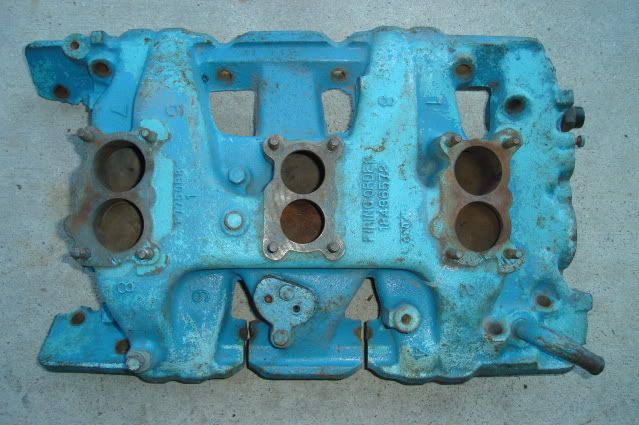
Here's the 1959 intake manifold.
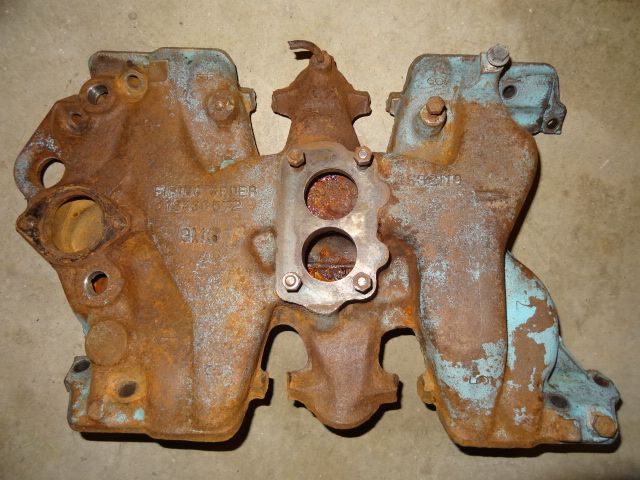
There isn't much material cast into it in the exhaust crossover region, it uses studs, castle nuts and large thick flat washers to clamp down on and seal the ports in this area.
It doesn't use a thermostat bypass port to the timing cover.
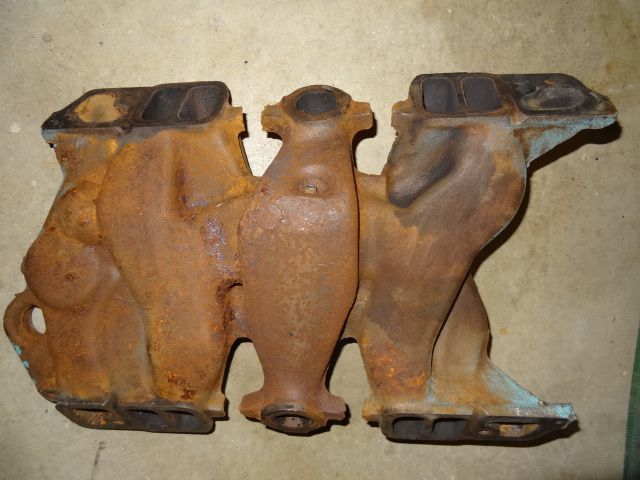
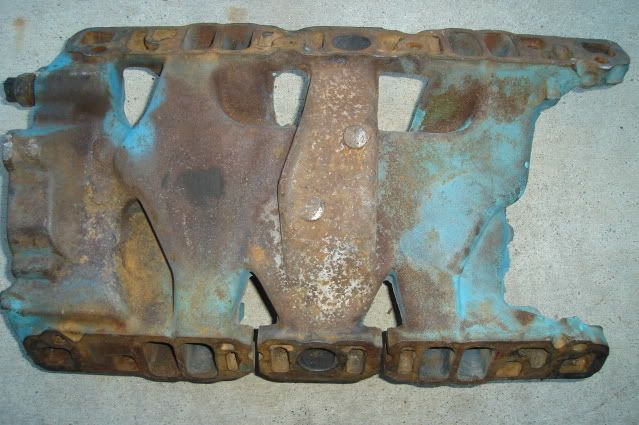
1964 intake, showing a lot of added material around the exhaust crossover flanges and different water port placement.
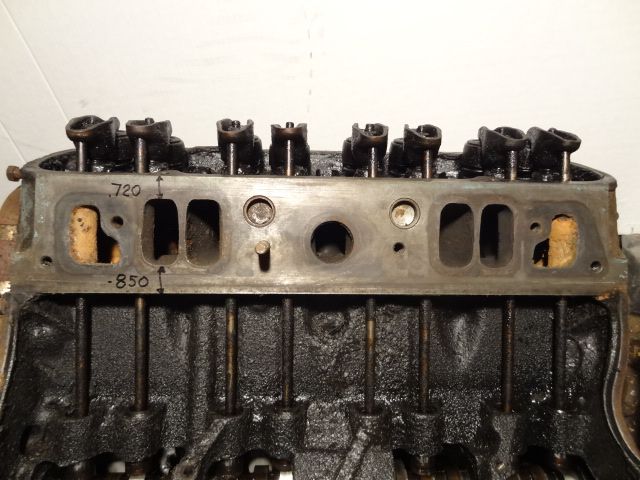
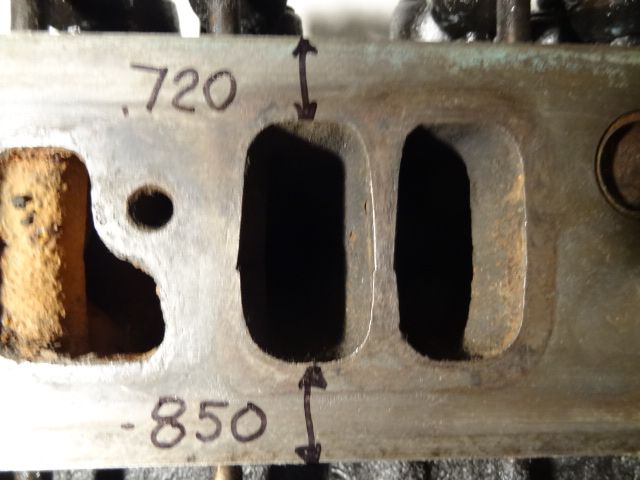
Here is where we will see one huge difference between the 1959 (1955 - 1960) and the '61 - '64 heads. The intake ports are almost the same exact size as the '64 head at 2.050" X 1.100", but the cylinder head itself is .320" taller than the later heads.
The valve cover rail is higher, both cylinder heads have the same .850" measurement from the cylinder head deck to the bottom of the port. However the '59 head measures .720" above the port compared to only .400" for the '64 head.
Note that since the valve cover rail is so much higher on the '59 head it doesn't have the small bump cast into the roof of 2 of the ports to keep the valve cover bolt hole from breaking into the port roof like on the '64 head.
Also take note that there are no openings on the intake side of the head that lead to the crankcase like on the later heads.
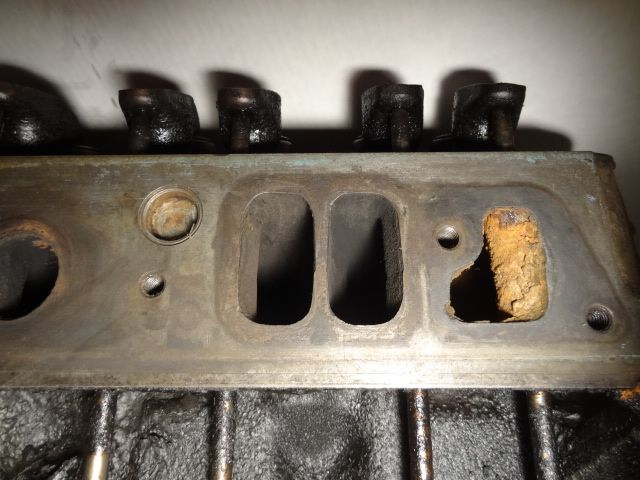
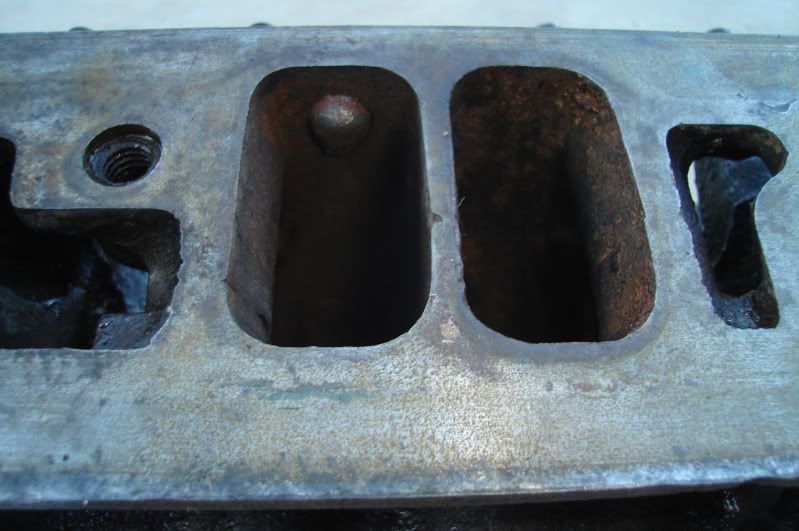
Again for comparison here's the round casting protrusion in the roof of the two end intake ports on the '64 head, put there to seal off the bottom of the tapped holes for the valve cover bolts.
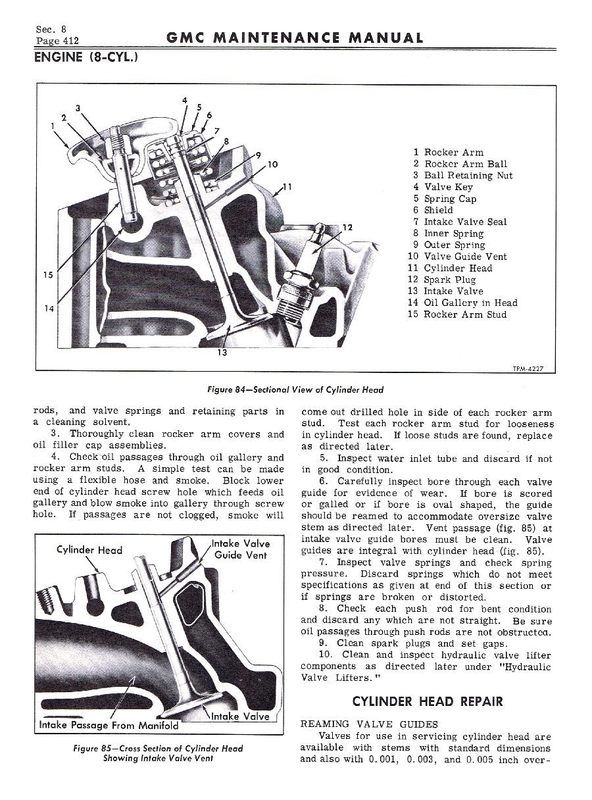
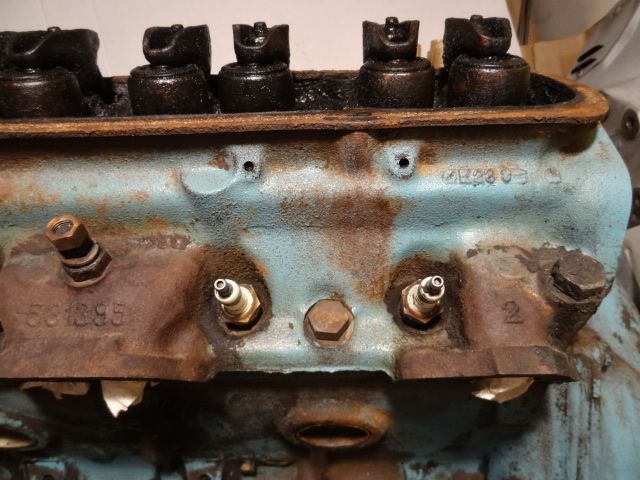
Another unusual feature that likely was the main reason the heads were so much taller, are the 4 intake valve guide vent holes in the side of the head just below the valve cover rail. These were put there to provide a vacuum break for the valve guides, to prevent them from sucking oil down into the combustion chambers.
These tall heads must have made these early engines look just a little bigger and wider than their later cousins.
Vent hole diagram from the factory manual.
A closer look at the vent holes.
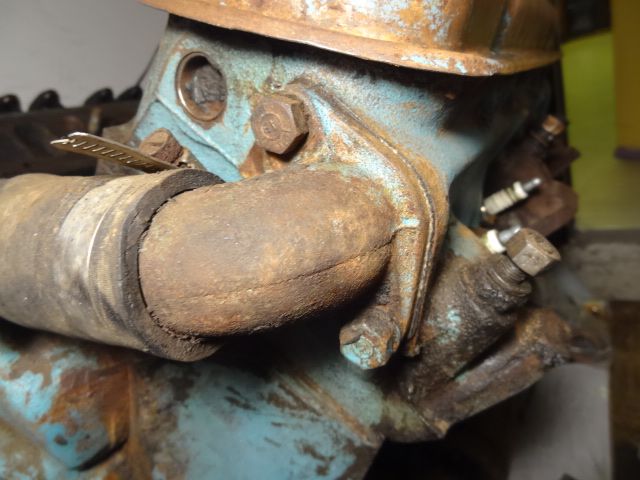
1959 was the last year that Pontiac used reverse cooling, pumping water first through the front of the cylinder heads and then down through the block. Here is one of the water fittings on the front of the head.
A view of the rear of the head, better showing the placement of the water channel. The small soft plug above the water channel blocks off the ends of the oil passage cast into the head that feeds oil to the rocker studs. All Pontiac heads oiled the rockers through the rocker studs until the introduction of the '63 -'64 9770716 heads, the only exception being the early Super Duty heads.