Quote:
Originally Posted by tom s

I would let your machinist tell you which one HE would machine and build.Tom
|
Thanks Tom.
When I picked up the 73 block and we reviewed the numbers, the machinist said he was most concerned about the #7 wall with a .107" thickness (non-thrust side) knowing I would be using a .040" overbore. He said if I was filling the block (I am), and shifted the bore over to keep as much wall as possible, I should be OK and we could probably keep it at .100". But that still leaves other bores (#4 & 6) with a finished thickness of .110" and .108" on the thrust sides unless I relocate those bores. If the bores are shifted, around .120" is the most I can get on the thrust side.
Maybe I should ask this a different way:
-what is the minimum recommended wall thickness on the thrust side when building a 500-550HP bracket motor?
-has anyone encountered block issues such as broken or cracked main bulkheads with the style of casting that this 71 block has, at this power level?
I should clarify that I don't see anything "wrong" with the 71 block, it is not a bad design like the 557 block, but in comparison to the 73 block it does have this different design with some thinner areas. Interestingly, not only are the cast surfaces smoother, but the block seems more dense in some way, tapping it has more of a ring that the 73 block does. I have read many posts that the blocks got thinner and lighter as time went on in the 70's, but that is not the case comparing these two examples.
__________________
Michael
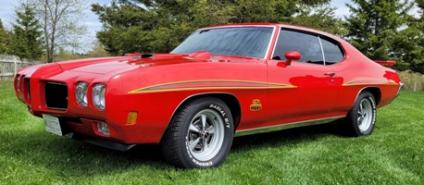
1970 Oshawa built 1 option Judge. 24 year restoration/upgrade project finally finished!
1979 Trans Am - low-buck drag car project for when I retire