


| FAQ |
| Members List |
| Social Groups |
| Calendar |
| Search |
| Today's Posts |
|
|
|
#1
 09-30-2017, 10:05 AM
|
||||
|
||||
 Question I could NOT answer as to why our OHCs won't rev higher than pushrod engines
I was showing a neighbor the OHC and he is like me, has more questions
than answers. He asked me the redline for the OHC and I stated what I thought was like 5200-5500. He asked why it doesn't rev higher since the limiting factor to most pushrod engines is valve float which we should not have. We both walked away stumped for an answer since we both know the valve is being moved just by the lobe on the cam. So why won't it rev higher? I realize the heads have a lot to do with it and cam grind but just for clarity, why won't our OHCs buzz up there in the 6500 range? Not that I want to do it, just curious as to why the limitations? What say yee? Inquiring minds want to know.  Thanks, AZ
__________________
A quote from a man named Jim Elliot I like: "He is no fool who gives what he cannot keep, to gain that which he cannot lose" |
|
#2
09-30-2017, 10:25 AM
|
||||
|
||||
 SCREAMING OHC
Big Brother GTO has the Red-line of 5500 Our OHCs have a 6500 limit.
 I personally have never taken one to its limits but thought about it  
__________________
When I die, I want to go peacefully like my grandfather did, in his sleep. Not screaming like the passengers in his car.
|
|
#3
09-30-2017, 10:42 AM
|
||||
|
||||
|
Well if you are NOT careful, you'll learn a thing or two here.
I guess I will tell the neighbor our assumption was wrong. I've had mine to 5000 rpms and felt like it was struggling to go much more. I guess the sprint cam and valve springs make a big difference. I have the intake and the 4 barrel and dual exhausts but I know that doesn't make a lot of difference when the valve timing overlap and spring pressure is what really makes a difference. I'll need to tell my neighbor just how wrong HE was.........  Thanks for post Jeff and man that is one hot OHC pic 
__________________
A quote from a man named Jim Elliot I like: "He is no fool who gives what he cannot keep, to gain that which he cannot lose" |
|
#4
09-30-2017, 02:21 PM
|
||||
|
||||
|
I have the Oem tach 6500 red line from my previous lemans sprint in my gto, just because I could...
George
__________________
"...out to my ol'55, I pulled away slowly, feeling so holy, god knows i was feeling alive"....written by Tom Wait from the Eagles' Live From The Forum |
|
#5
09-30-2017, 03:13 PM
|
||||
|
||||
|
Tachometer red-line OHC6 vs. V8
In 1966 and 1967 the recommended red-line RPM limits for the 4bbl version of the OHC6 engine was indeed 6,500 RPM. The rally gauges for a car with that engine reflect this as in post #2 above. What some people forget is that after 1967 Pontiac changed the way the crankshafts were made, or heat treated or it may have been the grade of steel those were made out of, starting 1968 including 1969 (the last year for the OHC6 engine) the RPM limit for the 4 bbl version of the cars with an OHC6 engine was downgraded to 5,500 RPM.
What is funny to me is that I see modern reproduction hood tachometers being marketed today with V8 electronics but the RPM red-line at 5,500 mis-represented as V8; Ram Air, RA II or RA4 tachometers which they are not! As far as I am aware all Lemans & GTO V8 engine cars from 1966 up to 1972 and with a factory tach (either hood or dash mounted) were clearly labeled with an RPM red-line starting at exactly 5,100 RPM. The 1970-4 trans am tachometer dial does have a slightly higher re-line than an A body car, I am not 100% sure why as in 1970 that car would have come with a 400 RA III engine in it; same as would have been standard in, say a 1970 GTO Judge.
__________________
Peter Serio Owner, Precision Pontiac |
|
#6
09-30-2017, 05:24 PM
|
||||
|
||||
|
I was told by "Mac" that GM was worried about warranty issues with the longer stroke 250 OHC-6's and they used weaker valve springs on the 68 & 69 Sprints to limit them to around 5400 RPM by having the valves float at that RPM, the sorter stroke 66 & 67 Sprints will rev beyond the 6500 RPM red line. By putting stronger valve springs on 250's I have been able to get them to over 6800 RPM. but they don't rev as fast or freely as the 230's do.
__________________
Jeff R 60 Jaguar Mark 2, 3.8L Automatic 67 Sprint Firebird 230 OHC-6 4-Speed A/C 1971 Fiat 130 Coupe 3.2L SOHC V6, ZF 5-speed 78 Catlina Safari, Pontiac 400 powered 77 Astre Formula, 215 Buick V-8 T-5 73 Lemans Safari, 400 4bbl 4-speed 71 Catalina Enforcer, 455 4bbl 05 Dodge Magnum 3.5L SOHC V6 06 Mallet Solstice #024 LS2, Now with a Tremec 6060 6-speed! 2012 F-150 Echo Boost (My local Ford Dealer SUX!!!) 2020 Dodge Charger Scat pack (recovered) |
|
#7
09-30-2017, 06:29 PM
|
||||
|
||||
|
Quote:
spring pressures to keep them sealed in the head? Or are they bouncing due to such high rpms they don't have time to seat? Sorry if the question is stupid.......
__________________
A quote from a man named Jim Elliot I like: "He is no fool who gives what he cannot keep, to gain that which he cannot lose" |
|
#8
09-30-2017, 08:16 PM
|
||||
|
||||
|
In a spring/mass system, at some typically high frequency, the inertia of the spring system. Tends to overcome the springs and they don't return the valves to the seat. Stiffer springs raise the frequency of the occurrence and reducing the mass of the system does also. Add pushrods and lifters adds mass, making control of the valves harder yet. OHC's certainly help in this issue.
George
__________________
"...out to my ol'55, I pulled away slowly, feeling so holy, god knows i was feeling alive"....written by Tom Wait from the Eagles' Live From The Forum |
|
#9
10-03-2017, 11:04 AM
|
||||
|
||||
|
Well said George, I also Like how most people compare their heavily modified Pontiac V8 with stock OHC-6's and state there is no advantage my Butler (or insert any other engine builders name) 462 Pontiac V-8 rev's to over 7000rpm!!!!! After replacing every internal engine compenate with a high quality aftermarket part.
__________________
Jeff R 60 Jaguar Mark 2, 3.8L Automatic 67 Sprint Firebird 230 OHC-6 4-Speed A/C 1971 Fiat 130 Coupe 3.2L SOHC V6, ZF 5-speed 78 Catlina Safari, Pontiac 400 powered 77 Astre Formula, 215 Buick V-8 T-5 73 Lemans Safari, 400 4bbl 4-speed 71 Catalina Enforcer, 455 4bbl 05 Dodge Magnum 3.5L SOHC V6 06 Mallet Solstice #024 LS2, Now with a Tremec 6060 6-speed! 2012 F-150 Echo Boost (My local Ford Dealer SUX!!!) 2020 Dodge Charger Scat pack (recovered) |
|
#10
10-04-2017, 01:48 PM
|
||||
|
||||
|
I put heavier duty valve springs in my 250 OHC engine and it still bottle necks hard at 5,150rpm. Almost flat stops accelerating by 5,600rpm. When I had 4.56 gears I tried hard to push over 6,000rpm and I don't think I ever hit 6,000rpm despite trying. This was with my home 1bbl ported head, dual exhaust, EFI and tried both the "C" and "E" cam's. My sheet metal intake seemed to add about 500rpm to it, but still didn't clear 6,000rpm. It acted like valve float or airflow restriction. The springs I have in it have about 50psi on the seat over the stock 4bbl dual springs, and it's got 2.5" exhaust, and running a throttle body equivalent of a Holley 4bbl carburetor, sans ventries. So if there is an air flow issue it's in the head/cam.
Few factors could effect this. Crap exhaust scavenging? I have too large of a collector pipe on each outlet. The low compression with poor ring seal limiting the amount of air sucking into the engine? My lash adjusters still pumping up and hanging a valve open despite having a separate oil pressure regulator?
__________________
__________________________________________ "How I learned to stop worrying and love the OHC Pontiac L6" 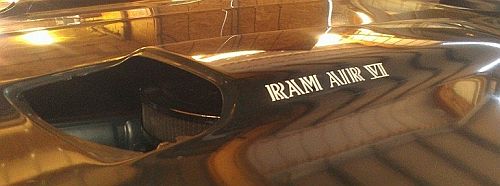 The Silver Buick- '77 Skylark coupe w/455, SPX, MegaSquirt 3 & TKO-600 (Drag Week 2011, 2012 & 2015!) 1969 Firebird with a turbo'd Pontiac L6 controlled by a MegaSquirt 3 and backed with a microsquirt controlled 4L60e and 4.56 gears! (Drag Week 2018!) |
|
#11
10-04-2017, 07:19 PM
|
|||
|
|||
|
My experience with my stock 230 Sprint with 1 7/8" duals was that it would rev, but no real power past 4500 ish rpm. When I rebuilt the engine and made it a 255 with an H cam and 230 Sprint head. I dynoed the engine to see what power it actually made. The peak HP was right at 5000 rpm and started tapering from there. We did not pull it past 5500, as there was no reason to. This was with the H cam, retarded 3 degrees, and shorty headers. The dyno operator told me the engine wanted more cam. (bigger) So if I were building one today, it would get a bigger grind and free flowing exhaust. (no stock Y pipe) Just my 2 cents.
|
|
#12
10-05-2017, 01:05 AM
|
||||
|
||||
|
Quote:
Quote:
Great posts gentlemen...............great posts..........love to see the ones who post results with the technical info accompanying it.
__________________
A quote from a man named Jim Elliot I like: "He is no fool who gives what he cannot keep, to gain that which he cannot lose" |
|
#13
10-05-2017, 08:32 AM
|
||||
|
||||
|
Those 2 posts do not match my experience, not saying that the posters are not accurately describing their experience.
The 230's I had with a manual transmission, long tube Clifford headers 2" true duals would pull strong to 6800-7000 rpm. The stock 250's with the same mods would turn 5200-5400 rpm. My present 301 stroker with an H-cam, long tube headers, duel exhaust will spin to 5200, but really is all done at around 4600rpm, is has LS1 valve springs installed, but the H-cam is not enough to feed the stoked engine, and the stock intake manifold is probably limiting the air flow as well. But the combo make plenty of low end torque and the 3500lb 69 Firebird runs 13.5 in the 1/4 so I am happy with it.
__________________
Jeff R 60 Jaguar Mark 2, 3.8L Automatic 67 Sprint Firebird 230 OHC-6 4-Speed A/C 1971 Fiat 130 Coupe 3.2L SOHC V6, ZF 5-speed 78 Catlina Safari, Pontiac 400 powered 77 Astre Formula, 215 Buick V-8 T-5 73 Lemans Safari, 400 4bbl 4-speed 71 Catalina Enforcer, 455 4bbl 05 Dodge Magnum 3.5L SOHC V6 06 Mallet Solstice #024 LS2, Now with a Tremec 6060 6-speed! 2012 F-150 Echo Boost (My local Ford Dealer SUX!!!) 2020 Dodge Charger Scat pack (recovered) |
|
#14
10-05-2017, 09:56 AM
|
||||
|
||||
|
Quote:
"different strokes for different folks" as bad humor here.......we are know how different components affect an engine and some work and some don't. I believe we have all seen how some add on's actually detract from the goal. It's always been the goal to find that secret combination to make an engine run as best as possible. Some find it, some are still looking for it and some are happy with what they have.
__________________
A quote from a man named Jim Elliot I like: "He is no fool who gives what he cannot keep, to gain that which he cannot lose" |
|
#15
10-05-2017, 11:55 PM
|
||||
|
||||
|
Quote:
The webbers make clean air flow into the head and your headers are pretty good long tubes. People under estimate the benefits of a good scavenging exhaust runner for overall engine airflow. I'm sure the air simply stall's out in my collector, then backing up into the stock dual exhaust manifold. I have a set of PrimaTech headers, I may use one day, but I want to finish my small tube turbo header and use it first. I'm hoping between the cast intake, the headers, the turbo, and the re-ground cam for more lift and a bit more duration, I can get a few more rpm out of it. Oh, and now sending a head off to be professionally cleaned up. Maybe at some point I'll bolt it all onto a 230 short block to see how it behaves.
__________________
__________________________________________ "How I learned to stop worrying and love the OHC Pontiac L6" The Silver Buick- '77 Skylark coupe w/455, SPX, MegaSquirt 3 & TKO-600 (Drag Week 2011, 2012 & 2015!) 1969 Firebird with a turbo'd Pontiac L6 controlled by a MegaSquirt 3 and backed with a microsquirt controlled 4L60e and 4.56 gears! (Drag Week 2018!) |
|
#16
10-05-2017, 01:35 PM
|
||||
|
||||
|
"stock intake manifold is probably limiting the air flow as well"
Jeff, hard to imagine, as I remember those ports being HUGE. George
__________________
"...out to my ol'55, I pulled away slowly, feeling so holy, god knows i was feeling alive"....written by Tom Wait from the Eagles' Live From The Forum |
|
#17
10-05-2017, 04:27 PM
|
||||
|
||||
|
mine has no problem bouncing off the rev limiter set at 6K 69 250 with H cam my own headers and side draft webers
__________________
When you really do something right it's like you didn't do anything at all 1931 Pontiac 5 window coupe OHC6 powered 2015 GMC Yukon SLT |
|
#18
10-07-2017, 10:55 AM
|
|||
|
|||
|
I guess I should have re-read my info before posting. It should have said 5600 ish, not 4600 ish on the 230 Sprint. This is a manual trans car also. Basically what I am saying is PEAK HP. Not saying that the engine won't or did not pull to the redline. Just the car started to nosed over a bit and not pull as hard. Basically the 230 Sprint engine does not make peak HP at 6500 rpm. Did not mean that it does not continue to pull. Hopefully that clarified my comments.
|
|
#19
10-12-2017, 06:00 PM
|
||||
|
||||
|
Recent Build with Dyno numbers..
...I forgot about this January 2017 Hemmings MM OHC build.
After the build they ran it and shared the results. I thought it fit in here. https://www.hemmings.com/magazine/mu...x/3750446.html
__________________
When I die, I want to go peacefully like my grandfather did, in his sleep. Not screaming like the passengers in his car.
|
|
#20
11-20-2017, 09:12 PM
|
||||
|
||||
|
Holy crap, glad i found this Thread to set the OHC-6 capabilty straight.
My experience is the Factory points dizzy dwell will walk with RPM and Govern the motor. Solution: replace dizzy with either a well setup Mallory Dual-Point or the HEI grafted on, and yea try the Pertronix thing dingy. To let the motor eat to 7500 rpm. My experience with the OHC-6 Sprint was to shift 1-2, 2-3 at 7000 rpm even 7500 rpm routinely. 3-4 shift was something sane because the MPH would be rather high by then. Power started pulling the car like Boost (or a potent V8) from 4500 thru 7000+ Stock Q-JET, Moon 280 degee cam , Clifford Header. I swapped to the Stock 69 4-spd cam and it idled better but still pulled as-strong to the 7's. Stock fuel system.... Quarter mile found the car falling to its knees on the 2-3 shift. Must get an electric fuel pump, or revamp the 5/16 system to 3/8 and the elec fuel pump. ------------------------------------------ Disclaimer: Original owner insisted i drive it that way because he drove that way. Well he wasn't kidding when i let him drive it once. Once was it, then i warmed into drivng it that way. Last edited by Half-Inch Stud; 11-20-2017 at 09:18 PM. |
| Reply |
| Thread Tools | |
| Display Modes | |
|
|
The PY Online Forums is the largest online gathering of Pontiac enthusiasts anywhere in the world. Founded in 1991, it was also the first online forum for people to gather and talk about their Pontiacs. Since then, it has become the mecca of Pontiac technical data and knowledge that no other place can surpass.




 Hybrid Mode
