


| FAQ |
| Members List |
| Social Groups |
| Calendar |
| Search |
| Today's Posts |
|
|
|
#1
 07-01-2018, 05:11 PM
|
|||
|
|||

OK, my question about lobe lift needs to be cleared up and you need to figure out/verify what lift you're actually seeing at the valve with the rockers you're using, what the actual coil bind height is with the retainers you're using, and what clearance you have before the retainer contacts the valve guide.
Those marks on the pushrods don't look like something I'd expect to see if the pushrod was rubbing on the head or inside of the guide plate...? I wish you lived near me, I have the tools to test all of this except the coil bind height of the spring. Take a spring and retainer assembly to a machine shop and have them test/verify pressures on the seat, pressure open at max valve lift and coil bind height with the retainer you're using. Verify your installed height. Best done with a spring seat micrometer like this one but can also be done roughly with a caliper. 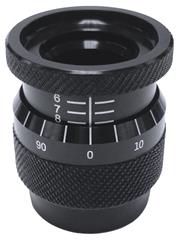 Get a set of lightweight checking springs and install them under your retainer. Check your retainer to guide clearance using a magnetic base stand for a dial indicator or a fixture for the dial indicator that screws into a valve cover bolt hole. You can also verify the lobe lift of your cam with a dial indicator. Measure off the lifter. Zero the dial indicator when the lifter is on the base circle then rotate the engine 'til you see the max reading on the indicator.
__________________
---------------------------- '72 Formula 400 Lucerne Blue, Blue Deluxe interior - My first car! '73 Firebird 350/4-speed Black on Black, mix & match. |
|
#2
07-01-2018, 06:08 PM
|
||||
|
||||
|
Enough info was provided to figure out these questions.
Lobe lift is just valve lift divided by the rocker ratio used, in this case 1.65. With .616 intake lift divided by 1.65 you get a .373" lobe. With .621 exhaust lift divided by 1.65 you get a .376" lobe. And no, I'm not sure why anyone would think that's too much lift for a street car. I've run that type of lift on the street for decades with no ill affect, no spring changes, nothing. As far as coil bind questions that spec was given at .830" so the springs even with a 1.65 rocker are .209" away from coil bind at their closest. And with an install height of 1.735" and 1.750" I'd be highly doubtful that a retainer is making any contact with the guide, even if a positive seal installed. Worth checking for piece of mind but doubt you'll find anything here. If Paul set those heads up I'd be confident they are spot on. I agree with Paul, 6200 rpm is nothing for a 455 and should have no affect on valve train durability or stability. Your witness marks on the original rockers however may have something to do with it, and from there the issue may have never went away even with a rocker change and more valve adjustments. Unfortunately now that they have been removed and changed there is no real way to tell if the witness marked rockers correspond to those pushrods. At this point I'd just spend the money on a good one piece thick wall pushrod, replace them, adjust the rockers the way Paul explains, and move on with it. |
| Closed Thread |
| Thread Tools | |
| Display Modes | |
|
|
The PY Online Forums is the largest online gathering of Pontiac enthusiasts anywhere in the world. Founded in 1991, it was also the first online forum for people to gather and talk about their Pontiacs. Since then, it has become the mecca of Pontiac technical data and knowledge that no other place can surpass.




 Hybrid Mode
