| FAQ |
| Members List |
| Social Groups |
| Calendar |
| Search |
| Today's Posts |
 |
|


Menu
| The Body Shop TECH General questions that don't fit in any other forum |


| Reply |
|
|
Thread Tools | Display Modes |
|
|
| The Body Shop TECH General questions that don't fit in any other forum |
| Reply |
|
|
Thread Tools | Display Modes |
|
#1
 07-23-2013, 06:34 PM
|
||||
|
||||
 Need advice for trailering
Well I got me an 18-foot flat/open trailer with a 2-foot dove tail on the end, 7000lb capacity. Now, when I fasten my '65 down for the ride, do I attach the ratchet straps to the lower a-frames and rear axle, or hook onto the frame itself and snug it down for the 560 mile ride? Certainly plenty of you guys have done this. What is the best/safest way to secure the car to the trailer/ Thanks for the input.
|
|
#2
07-23-2013, 07:20 PM
|
|||
|
|||

I do a criss cross pattern and hook to rear axle and lower control arms. I figured it would prevent the straps from loosening and tightening from the bounce of the car and it also allows the cars suspension to do it's job. Now this is for stock suspension. Not sure how some of the guys with race suspensions do their work.
|
|
#3
07-23-2013, 07:29 PM
|
||||
|
||||
|
Ideally you should secure each wheel to the trailer and let the suspension work on the car during the ride. You'll probably get more opinions that say to tie the suspension down tight, however this is not the accepted way to secure a car on a trailer or rollback.
Our host also owns the Snappin Turtle business seen in the sidebar advertisements and the gear that they sell is designed to tie down each wheel. This is also required by law to have a vehicle tied in 4 places on a trailer or rollback, less than that can get you a hefty fine. Enjoy the ride!!!!
__________________
Brad Yost 1973 T/A (SOLD) 2005 GTO 1984 Grand Prix 100% Pontiacs in my driveway!!! What's in your driveway? If you don't take some of the RACETRACK home with you, Ya got cheated    
|
|
#4
07-23-2013, 07:30 PM
|
||||
|
||||
|
Quote:
I do what DOC does. I'll add this: Pull over after a few miles or a few bumps and make sure it's all still tight. Then stop & check it again after a few more miles and bumps. Chris
__________________
Cum Catapultae Proscriptae Erunt Tum Soli Proscripti Catapultas Habebunt. 
|
|
#5
07-23-2013, 08:32 PM
|
||||
|
||||
 trailering
Sounds like good advice. I am aware of the criss-cross thing. I am told the troopers in Utah are real fond of it. And sure, stop and check early in the tow and a few more times down the road. I will look at what our host has to offer as well. Thanks Guys.
|
|
#6
07-23-2013, 09:18 PM
|
|||
|
|||
|
Also recommend to get a laser no touch temp gauge. When you pull over to check straps, measure the temps on the tires and hubs. they all should be moderately close but I promise you will see a big difference if a tire is running hot (under-inflated normally) or a hot bearing.
|
|
#7
07-23-2013, 11:13 PM
|
||||
|
||||
|
I've been towing 65's on open trailers since the early 80's. Since I've had straps (since the late 80's-before then I used chains and 'come-alongs') I've always put the straps thru the A frames in the front and around the rear axle. I have never criss crossed at the rear and never had any problem over the 10's of thousands of miles I have towed. I know that some recommend doing it that way, I've just always done it this way with no problem.
__________________
LEAD, FOLLOW, OR GET THE HE!! OUT OF THE WAY!!! HONEST JERRY'S SPEED AND EQUIPMENT
|
|
#8
07-24-2013, 07:34 AM
|
||||
|
||||
|
I use 4 4000 lb straps that are crossed and axle straps with D rings around the axle tube. I put pieces of cut seat trim leather around the axle where the strap is to prevent any cutting of the strap. I also chain the front and rear of the vehicle incase a strap breaks.

__________________
1971 Pontiac GT-37 Car is a junk yard dog and maybe one day will be restored. 
|
|
#9
07-24-2013, 08:23 AM
|
||||
|
||||
|
Ok - I'll be the odd man out here -
I always tie the frame down. It takes the trailer/car rig and makes it one "lumped mass", instead of having the car bouncing around on top of a bouncing trailer. I use a short chain binder (with a master lock to secure the lever) at each corner. Additionally, allowing the car to bounce on top of the trailer wears the shocks - or, in the case of an enclosed trailer, burns 'em up (because there is no airflow across the working shock). Dad and I built this trailer in 1967 and it has been in use continously since then; no telling how many miles are on it; still going strong. K 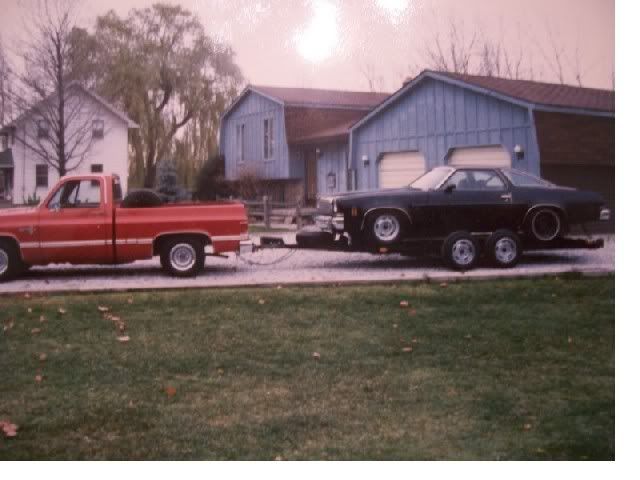 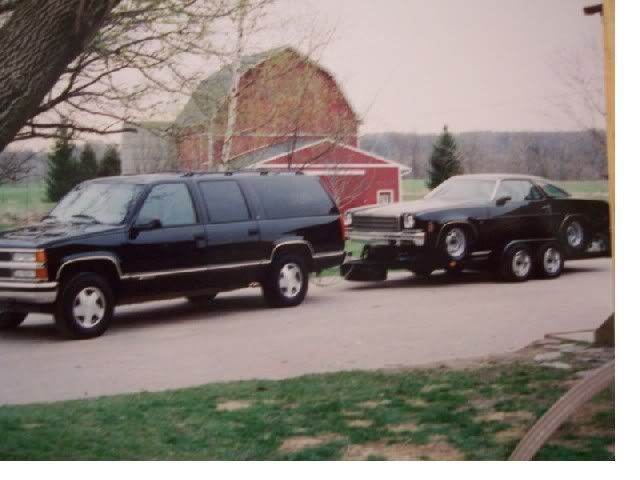 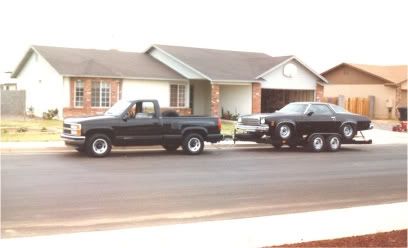
__________________
'63 LeMans Convertible '63 Grand Prix '65 GTO - original, unrestored, Dad was original owner, 5000 original mile Royal Pontiac factory racer '74 Chevelle - original owner, 9.56 @ 139 mph besthttp://www.superchevy.com/features/s...hevy-chevelle/ My Pontiac Story: http://forums.maxperformanceinc.com/...d.php?t=560524 "Intro from an old Assembly Plant Guy":http://67-72chevytrucks.com/vboard/s...d.php?t=342926 |
|
#10
07-24-2013, 11:15 AM
|
|||
|
|||
|
I have hauled both ways and prefer the way keith does it. I personally don't like the way it feels having the car bounce around on the back and also gives unneccesary momentum if you have to stop or change lanes quickly. With high quality straps in good condition I have never had an issue. Also will keep you from burning up your shocks.
|
|
#11
07-24-2013, 02:26 PM
|
||||
|
||||
|
I'm not trying to be a smart ass with this question, but... why would the shocks work any harder on a trailer ride than they would if the car was driving down the road? I could see less air cooling if it was in an inclosed trailer.
Chris
__________________
Cum Catapultae Proscriptae Erunt Tum Soli Proscripti Catapultas Habebunt.
|
|
#12
07-24-2013, 03:23 PM
|
|||
|
|||
|
Without getting into the math behind it you have a spring-mass-damper system on top of a spring-mass-damper system. You have random force inputs into the lower system which transfers into the upper system. In short the shock is constantly working to dampen out the harmonics cause from the car ocislating under its own weight and also the force inputs from the trailer. You will also feel this in the driver seat for 500 miles. If you strap the car down like Keith and myself it turns the top system into a common mass with the trailer and it feels like your hauling a boat.
|
|
#13
07-24-2013, 04:34 PM
|
||||
|
||||
|
Quote:
 This is the latest accepted way to tie down a car at this time because there is no stress being transferred into the frame and suspension. Strapping a car down at each end and putting tension on it can actually damage the suspension, especially on newer cars. Tying down each wheel so it can't move either way places no tension on the chassis or suspension. I haul with a tow dolly this way and also trailer without limiting the suspension travel. Keith, FYI anyone that knows me knows I have participated for many years and been around dirt oval cars. The shocks on these cars are quite expensive to buy or replace. Things change since the early 70s when I built the first oval car and that is how if you were lucky enough to have a trailer the cars were tied down holding the suspension compressed. Now every car I see in the pits is tied down by the rear axle and front tires, if this was ruining shocks (considering the cost of them) I'm sure the owners wouldn't be using this type of restraint on them. I said in my initial post there would be someone to contradict the way I stated was now considered the proper way to tie a car down and I'm sure points of each can be argued till doomsday. I've expressed my reasons and you fella can discuss it further and anyone else can pick their own way to do it. Make sure you have an auxiliary safety restraint as most states require a backup system to hold the car in the advent of a failure of the main system. In other words a chain on each end of the trailer in case both straps would fail the chain would keep the car with the trailer. Wheel lift and sling wreckers as well as roll backs all need a backup system in case of main strap failure to keep the car with the towing rig to be within the letter of the law. The backup system can be loose and doesn't need to be under tension, it just needs to be there in case. The fine for an unsecured load is really considered a serious offense and no one wants to be cited for it.
__________________
Brad Yost 1973 T/A (SOLD) 2005 GTO 1984 Grand Prix 100% Pontiacs in my driveway!!! What's in your driveway? If you don't take some of the RACETRACK home with you, Ya got cheated
|
| Reply |
|
|
The PY Online Forums is the largest online gathering of Pontiac enthusiasts anywhere in the world. Founded in 1991, it was also the first online forum for people to gather and talk about their Pontiacs. Since then, it has become the mecca of Pontiac technical data and knowledge that no other place can surpass.




 Linear Mode

