


| FAQ |
| Members List |
| Social Groups |
| Calendar |
| Search |
| Today's Posts |
|
#21
 06-19-2025, 11:45 AM
|
||||
|
||||

Oh that's cool!
__________________
Wernher Von Braun warned before his retirement from NASA back in 1972, that the next world war would be against the ETs! And he was not talking about 1/8 or 1/4 mile ETs! 1) 1940s 100% silver 4 cup tea server set. Two dry rotted 14 x 10 Micky Thompson slicks. 1) un-mailed in gift coupon from a 1972 box of corn flakes. Two pairs of brown leather flip flops, never seen more then 2 mph. Education is what your left with once you forget things! |
|
#22
06-19-2025, 04:59 PM
|
||||
|
||||
|
Quote:
__________________
1977 Black Trans Am 180 HP Auto, essentially base model T/A. I'm the original owner, purchased May 7, 1977. Shut it off Shut it off Buddy, I just shut your Prius down... 
|
|
#23
06-19-2025, 05:32 PM
|
||||
|
||||
|
Quote:
I've heard the comment several times, they are "torquey motors.....", compared to what? Me riding a bicycle up hill???  I've taken heat here, some, for calling them, NOT real Pontiac engines. They are the Pontiac engineering departments forced agenda to come up with a better emission better MPG engine. They went a little too far.  I think their first year of production was 1976 and it ended in 1981. I know that firebirds got 305's in the new "F" bodies in 1982. I read speculation and maybe it was mostly hopefulness the the 301's would still be produced after 1981... Seems as though I've the there was possibly an engineering plan to produce a twin turbo'd 301 for the TA's??? Doesn't sound right. I remember anxiously awaiting the arrival of the turbo 301 engine. I read back then, in magazines, the the turbo engine was having crankshaft issues. Someone, here, years ago passed on a story: Back in his early teen days he used to have a friend who's relative owned a salvage yard. The relative would allow them to fiddle with stuff as long as they were not destroying a sale-able part. One if the things they do is, find 2-3 same non running engines, Tear them apart and make one running engine, maybe put in a car and putt around the yard....... Oh boy, they had found 3 Pontiac 301's that were locked up!!! They were enthusiastic in their endevour. Until they took the oil pans off. All 3 had broken crankshafts, 
__________________
1977 Black Trans Am 180 HP Auto, essentially base model T/A. I'm the original owner, purchased May 7, 1977. Shut it off Shut it off Buddy, I just shut your Prius down...
|
|
#24
06-19-2025, 06:01 PM
|
|||
|
|||
|
Quote:
block? |
|
#25
06-19-2025, 06:06 PM
|
||||
|
||||
|
The 301 T (turbo) blocks are thicker.
__________________
1964 Tempest Coupe LS3/4L70E/3.42 1964 Le Mans Convertible 421 HO/TH350/3.08 2002 WS6 Convertible LS1/4L60E/3.23 1966 VW Type 2 Single Cab Pickup 140hp 2276 1956 VW Type 2 Panel Van 36hp 1200 1957 VW Type 1 Beetle 180hp 2276 |
|
#26
06-19-2025, 06:08 PM
|
||||
|
||||
|
Quote:
__________________
1964 Tempest Coupe LS3/4L70E/3.42 1964 Le Mans Convertible 421 HO/TH350/3.08 2002 WS6 Convertible LS1/4L60E/3.23 1966 VW Type 2 Single Cab Pickup 140hp 2276 1956 VW Type 2 Panel Van 36hp 1200 1957 VW Type 1 Beetle 180hp 2276 |
|
#27
06-19-2025, 06:24 PM
|
||||
|
||||
|
If GM’s intended goal with this engine was better fuel economy from less cubic inches, wouldn’t it have been way easier to cast up a 3” rotating assembly and use 350 blocks?
__________________
LIFT HEAVY, LIFE IS TOO SHORT TO BE SMALL! |
|
#28
06-19-2025, 06:27 PM
|
|||
|
|||
|
NO!Too much iron in 350 blocks compared to a short deck.301s are 3in main.Tom
|
|
#29
06-19-2025, 06:33 PM
|
||||
|
||||
|
To clarify, 3” stroke .
__________________
LIFT HEAVY, LIFE IS TOO SHORT TO BE SMALL! |
|
#30
06-19-2025, 06:49 PM
|
||||
|
||||
|
Lighter weight along with a lower overall profile to fit under lower modern hood lines and just plain less cubic inches for both fuel economy and emissions are the reasons for the short deck 301 and 265.
Weakened thin block castings, flimsy non-counterweighted crank lower ends and siamesed intake ports. Yuck. It’s really no wonder why these engines are less popular to say the least among Pontiac enthusiasts who like the power and torque that Pontiac V8s were famous for. The low-compression 400 Trans Ams of the mid to late ‘70s were already enough of a disappointment and then along came the 301 turbo T/A…..  The early 287, 317, 347 and 370 V8s were already bulky and heavy for their cubic inch displacement. Once the 1959 389 appeared on the scene it finally had enough displacement to justify its weight and bulk. Reasons why the 350 and 326 are passed over as well, too big and heavy for their small displacements.
__________________
1964 Tempest Coupe LS3/4L70E/3.42 1964 Le Mans Convertible 421 HO/TH350/3.08 2002 WS6 Convertible LS1/4L60E/3.23 1966 VW Type 2 Single Cab Pickup 140hp 2276 1956 VW Type 2 Panel Van 36hp 1200 1957 VW Type 1 Beetle 180hp 2276 |
|
#31
06-19-2025, 08:19 PM
|
|||
|
|||
|
Joe Sherman was not worried about the 301T blocks,it the rest of the engine that gives them a bad rap.Heads intake and crank suck.Making one into a 383 stroker with 400 heads or RA V heads is NOT for the weak of wallet!Tom
|
|
#32
06-19-2025, 09:10 PM
|
||||
|
||||
|
The 1981 301 turbo had the highest horsepower and torque ratings for any V8 used in GM passenger cars, even better than the L81 350 in the Corvette.
I've told the story before, but my automotive engineering professor at GMI, Jim Lyons, left the university to head up Pontiac's turbo development. The crankshaft strength limited maximum design output to 280 HP. But the fully dressed engine was 110 pounds lighter than the 350 which helped offset the power drop. And it still produce 340 LbFt of torque. There was interest in offering the engine in the Grand AM as well. Given what was available at the time, the Turbo T/A was one of the best performers GM had, especially in the handling department with the lighter engine. Jim went on to being lead chassis engineer on the 3rd gen Firebird. |
|
#33
06-19-2025, 11:23 PM
|
||||
|
||||
|
Quote:
There's a front counterweight, there's a rear counterweight, and there's a bunch of iron in-between saying "Daddy, when I grow up, can I be a counterweight just like you and Mom?" 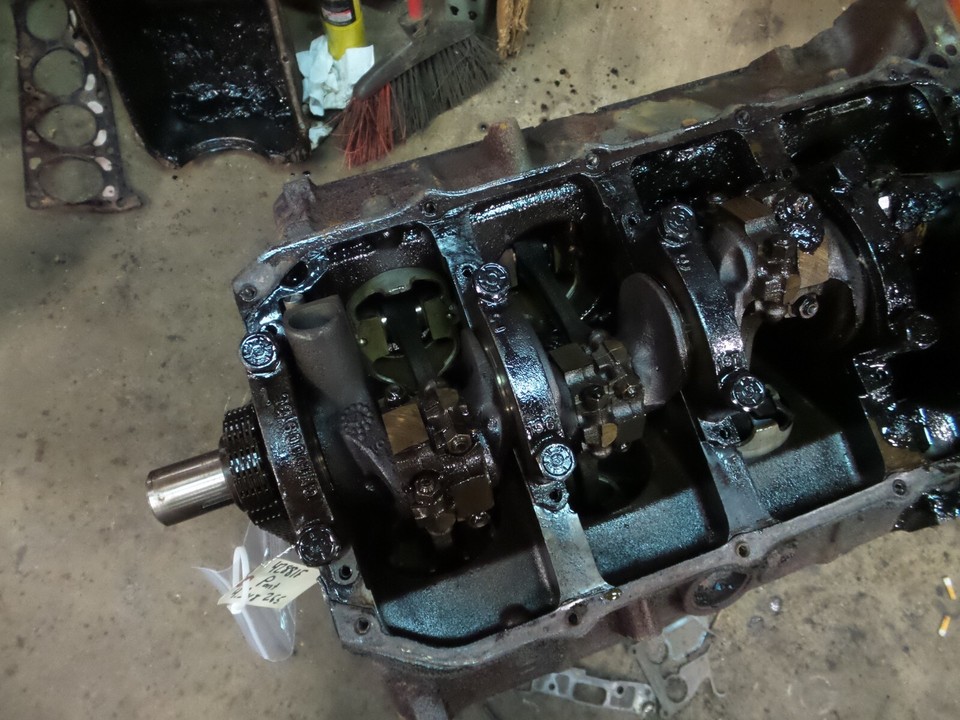  Quote:
Quote:
Last edited by Schurkey; 06-19-2025 at 11:28 PM. |
|
#34
06-20-2025, 12:33 AM
|
||||
|
||||
|
Quote:
Stan
__________________
Stan Weiss/World Wide Enterprises Offering Performance Software Since 1987 http://www.magneticlynx.com/carfor/carfor.htm David Vizard & Stan Weiss' IOP / Flow / Induction Optimization - Cam Selection Software http://www.magneticlynx.com/DV Download FREE 14 Trial IOP / Flow Software http://www.magneticlynx.com/DV/Flow_..._Day_Trial.php Pontiac Pump Gas List http://www.magneticlynx.com/carfor/pont_gas.htm Using PMD Block and Heads List http://www.magneticlynx.com/carfor/pont_pmd.htm |
|
#35
06-20-2025, 12:51 AM
|
||||
|
||||
|
They took weight reduction to a crazy level in these 2 engines, they removed 2 rows of links on the timing chains and narrowed the timing gears in their quest to cut weight.
The conventional timing chain and gears can be substituted without any changes, but think of retooling for thinner timing chains and gears to save a few ounces..............crazy  The early blocks (77-79) also had all the nickel removed from the blocks. They were incredibly soft and wore the bores out really quickly. At 60,000 miles you had to cut the ridge out of the blocks just to remove a piston. I've routinely disassembled older Stratostreak engines and even at 150,000 miles you could still remove the pistons without cutting the ridge out of the cylinders. This was the time that all the GM lines cut costs by removing alloys that improved the cast iron for wear resistance. I guess accountants thought no one would realize the engines were wearing out sooner and save 50 cents per car........  This was really when GM lost their market share, and never would regain it............... 
__________________
Brad Yost 1973 T/A (SOLD) 2005 GTO 1984 Grand Prix 100% Pontiacs in my driveway!!! What's in your driveway? If you don't take some of the RACETRACK home with you, Ya got cheated   
|
|
#36
06-20-2025, 09:04 AM
|
||||
|
||||
|
Those efforts GM went to - in order to build a small CID package using as much existing tooling as possible, made for some odd ducks for sure. Olds took the 350 and made the 260 by keeping the crank the same and reducing the bore size to the point where it physically couldnt be made any smaller and end up with an engine capable of being assembled and rotated. 3.5x3.385 isnt gonna impress anybody.
__________________
Clutch Guys Matter _______________________________________ 53 Studebaker, 400 pontiac 72 4-4-2 Mondello's VO Twister II 1964 F-85 Home of the 700hp small-block Olds **Still wanting a 64 Bonneville or Catalina** |
|
#37
06-20-2025, 11:23 AM
|
|||
|
|||
|
i believe the 265 is to the 301 (non "T") like the 350 to a 400. just a smaller bore. I had a 265 block for a short period. I couldn't give it away. I ended up junking it with a car.
__________________
1979 Firebird Trans Am 301/4spd (Now 428) 1977 Firebird Formula 400/Auto 2007 Grand Prix GXP 5.3L Last edited by 74Grandville; 06-20-2025 at 12:01 PM. |
|
#38
06-20-2025, 02:25 PM
|
|||
|
|||
|
We made 478 HP @6000 with the 383 301.Tom
|
|
#39
06-20-2025, 03:50 PM
|
||||
|
||||
|
Quote:
You need to add that the HP had not peaked yet @ 6000 RPM Stan
__________________
Stan Weiss/World Wide Enterprises Offering Performance Software Since 1987 http://www.magneticlynx.com/carfor/carfor.htm David Vizard & Stan Weiss' IOP / Flow / Induction Optimization - Cam Selection Software http://www.magneticlynx.com/DV Download FREE 14 Trial IOP / Flow Software http://www.magneticlynx.com/DV/Flow_..._Day_Trial.php Pontiac Pump Gas List http://www.magneticlynx.com/carfor/pont_gas.htm Using PMD Block and Heads List http://www.magneticlynx.com/carfor/pont_pmd.htm |
|
#40
06-20-2025, 04:59 PM
|
|||
|
|||
|
In the conversation of lightened blocks, aren’t the last 400 blocks produced the lightweight “windowed” blocks?
|
| Reply |
|
|
The PY Online Forums is the largest online gathering of Pontiac enthusiasts anywhere in the world. Founded in 1991, it was also the first online forum for people to gather and talk about their Pontiacs. Since then, it has become the mecca of Pontiac technical data and knowledge that no other place can surpass.






 Linear Mode

