


| FAQ |
| Members List |
| Social Groups |
| Calendar |
| Search |
| Today's Posts |
|
#21
 11-26-2005, 10:32 PM
|
||||
|
||||

I see what you are saying, I am not sure what either of the aftermarket blocks require as far as machine work is concerned, but I do know that you can get either block in a small bore so you do not need to get all the fancy heads and oil pump. I am pretty sure that there is not a mandate that you have to build a 500+ cubic inch engine first time out. I do understand that you would not want to use a cast crank in a 3500 dollar block but if a person was starting out with a 400 block you would have 3000+ into it anyway, so maybe you would not want to use a cast crank in your 3000+ factory block... Now for somebody that already has had a block that they are running and have already done all the upgrades then this would be the next step, I know I would have bought one if I already had $2000 into a block and I wanted some more insurance to protect my investment....I am not agianst this I wish one would have been availible a long time ago but there was not and now I have to cracked 455 blocks sitting on the garage floor $4000+ sitting there just staring at me
 boy if I had it to do over... boy if I had it to do over...Chad
__________________
3500lb 10.5" tire. [email protected] with a poor 60' |
|
#22
11-26-2005, 10:55 PM
|
||||
|
||||
|
Quote:
girdle might have helped?
__________________
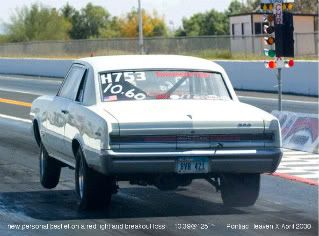  My Daddy bought me a car but all I got was this old Pontiac. My Daddy bought me a car but all I got was this old Pontiac.
|
|
#23
11-26-2005, 11:07 PM
|
||||
|
||||
|
wow that had to be a surprise when you opened it up
Chad
__________________
3500lb 10.5" tire. [email protected] with a poor 60' |
|
#24
11-26-2005, 11:09 PM
|
||||
|
||||
|
if you do not mind me asking, what all was done to the block?
Chad
__________________
3500lb 10.5" tire. [email protected] with a poor 60' |
|
#25
11-26-2005, 11:58 PM
|
|||
|
|||
|
Quote:
Wonder if a band aid would help if applied before the break? 
|
|
#26
11-27-2005, 12:40 AM
|
||||
|
||||
|
I agree that if one was starting a full on Pontiac engine, a good starting point would be the IA2 block. Unfortunatly most buildups don't start that way, I know ours didn't. Also, this is an engineering excersize that I wanted to share with you Pontiac guys. It was not my intent to produce these on a commercial level, although if we end up doing a few extra, I have no problem with that. Let's just see if we have a workable part first. Just my feelings on the matter.
|
|
#27
11-27-2005, 01:26 AM
|
|||
|
|||
|
put me in line. got all the work done for a build up but as usual i've added go fast stuff until i'm concerned the block won't handle it.
|
|
#28
11-27-2005, 01:48 AM
|
||||
|
||||
|
Ok now that you have my name in lights and have me eating crow, when you say stroker, I suppose you mean a 4.21 or 4.25 stroke? Now that is a 455 not a 400. When I said 400 I meant an engine with a 3.75 stroke, a lot easier on the block. That is a very cool picture, I am sure it's not cool to the owner though.
Tim C
__________________
Tim Corcoran |
|
#29
11-27-2005, 01:49 AM
|
|||
|
|||
|
FWIW my SBF ford buddies generally view the girdle as a nice piece to keep the block together WHEN it splits (SBF splits somewhere above 500hp) and save the rotating assy. In that application it doesn't seem to help much one way or the other given the existing designs.
I would think that a worthwhile girdle design would help to prevent the main webs from cracking in the first place, and therein lies the challenge. |
|
#30
11-27-2005, 04:11 AM
|
||||
|
||||
|
That's us, we have added go fast stuff and now we are worried about the bottom end. So we just want some insurance. We also plan a little juice, so I want the crank, but more so, the block to stay healthy. One thing I may ask all of you, is that I need to fab a windage try, since the stocker wont fit, any suggestions on fabing one up ? As in material ? I was thinking of using that perforated metal and forming up one to bolt to the girdle and fit close around the pan. Anybody have a pic of one they have made ? Maybe making it a double layer deal, off setting the holes so they dont line up, I dont know, just thinking again.
|
|
#31
11-27-2005, 04:17 AM
|
||||
|
||||
|
i am interested in a girdle any ballpark price??
|
|
#32
11-27-2005, 04:33 AM
|
||||
|
||||
|
I really dont know yet. Shouldn't be to bad since the run time on the CNC doesn't look bad. Of course it depends on how many we run. I really hadn't planned on selling these, but we can run some extra, if there is enough interest. When we arrive on the finished product, I will get an idea of how many want them and then I will have a cost. The 3 center main caps will require some simple machining. You should be able to get that done locally from anyone that has a mill. It's mainly to get a proper fit to the mains. I will shoot some pics of the main caps after machining so you will get a better idea of what we are doing. As said before, this is an engineering excersize and all of your input is more than welcome. I don't profess to have all the answers. I figure that if someone thinks they have all the answers, hasn't heard all the questions yet. We are also going to make our own motor plate. I know BOP sells one, but that's not our style....lol. We like to make out own stuff. We are going to design one that uses a SBC water pump and timing cover. These guys at the strip are having a hard enough time trying to figure out what kind of motor is in our firebird, wait till they see it this time. "Hey, what kind of Chevy motor is that?"......I can hear then now.
|
|
#33
11-27-2005, 10:58 AM
|
|||
|
|||
|
I saw on HP TV one day a brace for a Ford small block that went under the intake in the valley to help prevent block spliting. This seems to be exactly the product needed that and a Gridle for the mains might make fora very stout set-up. This piece went between the cylinder banks and was set on dowels that were drilled and was bolted down looked pretty neat.
|
|
#34
11-27-2005, 01:00 PM
|
||||
|
||||
|
BVR421: did you have factory-positioned Motor Mounts or Engine Plates?
|
|
#35
11-27-2005, 01:51 PM
|
||||
|
||||
|
I'm trying to visualize this support you speak of. Sounds interesting. I happened to miss that episode of HPTV. I would think that a motor plate and mid plate would go toward supporting the block from spliting. I think that a girdle would also help, but offer more support to the web area. But then again, A IA2 block is the ticket, but most of us, like me, do things bacwards. There is something to say about running a stock block. I mean, let's at least keep one Pontiac part in the engine....lol.
|
|
#36
11-27-2005, 02:22 PM
|
||||
|
||||
|
Rfb, I looked into making a girdle for my twin turbo 400 project,not the halo type that the Ford boys use but a machined steel piece that bolts to the pan rails and over the top of the machined flat caps. I'm pretty certain that this would strenghten the bottom end of the block but I came to the conclusion that the amount of HP I wanted would break a cast crank anyway,probably sooner rather than later. I like you tend to make most of my own custom parts and have fitted a SBC electric water pump,I just fitted a flat ali plate where the original water pump was and bolted the electric pump to this plate(after a bit of grinding). It seems to work alright.
|
|
#37
11-27-2005, 02:32 PM
|
||||
|
||||
|
taff2......you may very well be right. All this may be just an excercise in peeing in the wind. Who really knows for sure.
|
|
#38
11-27-2005, 03:05 PM
|
|||
|
|||
|
J&S Machine (south central IL)makes them for Olds engines, (about 4 - 5 yrs now). The halo girdle holds the weakling 403 windowed main web block together to aprx 600 HP. 403 Olds is probably the weakest design of a block ever made !
If you do not want to invest too much time into this project you may want to confer with Jim @ J&S. He makes several versions of smallblock and bigblock Olds, and even a 5 main halo with add-on side rails to make it a full girdle. www.jsmachineoldsmobile.com
__________________
Tim King |
|
#39
11-27-2005, 03:34 PM
|
||||
|
||||
|
Thanks for the link.......we are going along with the project anyway. We just like to do things ourselves. We're kinda weird that way. The pictures were interesting. I know that the 403 is weak in the main area and requires all the support possible. I do need some input from you guys as to what is really needed for the Pontiac engine. We are at the point now where we need to determine if we need to go with a 3,4 or five main halo girdle. I really don't think it is necessary to tie it to the pan rail. I may be wrong though. One thought, though, is that it could be tied to the block, at the three center mains, via the bolt holes provided for a 4 bolt cap. Just thinking out loud here. Give me some input on this one.
|
|
#40
11-27-2005, 04:01 PM
|
||||
|
||||
|
Quote:
"I saw on HP TV one day a brace for a Ford small block that went under the intake in the valley to help prevent block spliting. This seems to be exactly the product needed that and a Gridle for the mains might make fora very stout set-up. This piece went between the cylinder banks and was set on dowels that were drilled and was bolted down looked pretty neat." Stealing my ideas again! LOL! Not really. Some years ago I posted about how to tie the top of a Pontiac block together on a pure race deal. The guy who made the ALGON fuel injection systems for the RAM AIR V and other things many years ago told me how he made deck plates that went between the block and the heads and used longer head dowels and head studs. There was one plate for each side. Three things were happening with the deal: 1) The plates basically made the engine into a dry deck deal as there was no water transfer between the block and the heads (like the IA-2 today). 2) The flanged sleeves, that were installed in the steel plate/ block, were firmly held in place in a pocket machined in the plate and by the heads. No way the sleeve could ever move therefore the thin material between the cylinders was not an issue with sleeves being installed in every hole. He did fill the block with concrete though too. "OLD SCHOOL" The plates had heim connections to preload the block at the top with three adjustable braces. Because the engine used Fuel Injection the braces missed the intake runners and the valley pan. 3) The bottom of the block used a "three main" girdle that went over the top of the three center caps and extended the length of the of the oil pan depth. The pan had to be modified to seal the pan as the girdle tied into the pan rail. He made a lot of power with his deal and ran a large cid engine with a long stroke crank. Over 500 cid supposedly. The taller deck motor probably allowed him to use the 421 SD parts with the longer crank stroke. In those days I have seen pics where Hot Rodders would completely cut the deck off an engine and then braze it back on at a different deck height location. Now here is the wisdom! He told me that the aluminum intakes like he was making for the Fuel Injection years later actually made the block fail quicker. He said that the CAST IRON intakes tied the top of the block together very well (especially on the 64 and earlier blocks). His thought was when you put an aluminum intake on the engine you took away a bunch of that upper strength. Cutting the water cross-over off and running the water hoses to the heads made it even worse. Running the split intakes like the after-market had in the old days with the rubber tubes connecting the two plenum halves was the worst. His FI intake needed to have some way to strengthen the block which is why he came up with the deck plates. He always thought the cast-iron intake with a front and rear plate that tied the heads together was a good deal. He used a off-set distributor though. Today we could use a BOP distributor deal. Just some more history for you to think about. Tom V.
__________________
"Engineers do stuff for reasons" Tom Vaught Despite small distractions, there are those who will go Forward, Learning, Sharing Knowledge, Doing what they can to help others move forward. |
| Reply |
|
|
The PY Online Forums is the largest online gathering of Pontiac enthusiasts anywhere in the world. Founded in 1991, it was also the first online forum for people to gather and talk about their Pontiacs. Since then, it has become the mecca of Pontiac technical data and knowledge that no other place can surpass.




 Linear Mode

