


| FAQ |
| Members List |
| Social Groups |
| Calendar |
| Search |
| Today's Posts |
|
|
|
#1
 06-30-2018, 09:11 PM
|
||||
|
||||

Paul, could you post that adjustment chart? That would come in handy.
__________________
I could explain all this to the girl at the parts store, but she'd probably call the asylum. White '67 LeMans 407/TH350/Ford 3.89... RIP Red '67 LeMans. 407/TH400/Ford 3.25 |
|
#2
07-01-2018, 09:11 PM
|
||||
|
||||
|
I don't know enough about cars to inspect anything. I had a few guys look at it before and after the rockers were replaced and adjusted, nobody caught that. I'm confident when Paul takes a look at it again, all will be good!
|
|
#3
07-01-2018, 09:37 PM
|
||||
|
||||
|
Typically a bent pushrod look like a mangled soda straw. Really bent.
And I agree that if all those poly locks are all the same type and are tight in that last picture, something is wrong. The inner lock portion should be pretty consistent across all the poly locks. The Crower rockers have a little recessed area in the trunnion on one side for the poly lock.. Maybe a couple of the trunnions are flipped upside down? different rocker arms can sometimes require different pushrods. It this was my motor, I would pull the intake and Valley Pan, and verify the condition of the lifters, cam, preload and geometry.
__________________
I could explain all this to the girl at the parts store, but she'd probably call the asylum. White '67 LeMans 407/TH350/Ford 3.89... RIP Red '67 LeMans. 407/TH400/Ford 3.25 |
|
#4
07-01-2018, 09:54 PM
|
|||
|
|||
|
Quote:
|
|
#5
07-02-2018, 07:46 PM
|
||||
|
||||
|
I understand having too many hands in the motor. Since, I'm very new to this, I certainly wouldn't want to do the adjusting myself. I have to wait until friends are available to help in between working on their car and their job. There is one common denominator though. The ticking noise was present when the car was first started with the Crane rockers as it is now after switching to the Crower rockers. It's the same sound coming from the same location. It "appears" to be coming from the #8 location but I now understand how noise can travel.
The pushrods were checked and 5 of them were bent. Bent may be too extreme of a word. I think it would be best described as "warped". All the good pushrods rolled off the piece of glass where the "warped" ones wobbled and did not roll off the glass. |
|
#6
07-01-2018, 04:34 PM
|
|||
|
|||
|
Bent pushrods are a symptom of a pushrod that is too weak for the spring pressure used, a lack of clearance in the valvetrain, usually coil bind but could also be a lack of retainer to guide clearance, or possibly contact with the top of the pushrod hole in the head.
What is the lobe lift of the cam? You said .616"/.621" lift - is that measured at the valve and if so, with what rocker ratio? That's a lot of lift for a street engine. Have you verified your retainer to guide clearance? You also said .083"+ to coil bind. That's measured with the actual lift at the valve, correct? Was it measured with the retainer in place on the top of the spring? I've seen dual springs coil bind on the inner spring before the outer spring when the retainer is in place. Are there any witness marks on the pushrods from anything other than the guide plates? What guide plates are used? is there any chance the pushrod is contacting the inside of the guide plate or top of the pushrod hole in the head?
__________________
---------------------------- '72 Formula 400 Lucerne Blue, Blue Deluxe interior - My first car! '73 Firebird 350/4-speed Black on Black, mix & match. |
|
#7
07-01-2018, 05:11 PM
|
|||
|
|||
|
OK, my question about lobe lift needs to be cleared up and you need to figure out/verify what lift you're actually seeing at the valve with the rockers you're using, what the actual coil bind height is with the retainers you're using, and what clearance you have before the retainer contacts the valve guide.
Those marks on the pushrods don't look like something I'd expect to see if the pushrod was rubbing on the head or inside of the guide plate...? I wish you lived near me, I have the tools to test all of this except the coil bind height of the spring. Take a spring and retainer assembly to a machine shop and have them test/verify pressures on the seat, pressure open at max valve lift and coil bind height with the retainer you're using. Verify your installed height. Best done with a spring seat micrometer like this one but can also be done roughly with a caliper. 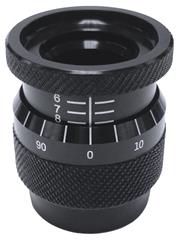 Get a set of lightweight checking springs and install them under your retainer. Check your retainer to guide clearance using a magnetic base stand for a dial indicator or a fixture for the dial indicator that screws into a valve cover bolt hole. You can also verify the lobe lift of your cam with a dial indicator. Measure off the lifter. Zero the dial indicator when the lifter is on the base circle then rotate the engine 'til you see the max reading on the indicator.
__________________
---------------------------- '72 Formula 400 Lucerne Blue, Blue Deluxe interior - My first car! '73 Firebird 350/4-speed Black on Black, mix & match. |
|
#8
07-01-2018, 06:08 PM
|
||||
|
||||
|
Enough info was provided to figure out these questions.
Lobe lift is just valve lift divided by the rocker ratio used, in this case 1.65. With .616 intake lift divided by 1.65 you get a .373" lobe. With .621 exhaust lift divided by 1.65 you get a .376" lobe. And no, I'm not sure why anyone would think that's too much lift for a street car. I've run that type of lift on the street for decades with no ill affect, no spring changes, nothing. As far as coil bind questions that spec was given at .830" so the springs even with a 1.65 rocker are .209" away from coil bind at their closest. And with an install height of 1.735" and 1.750" I'd be highly doubtful that a retainer is making any contact with the guide, even if a positive seal installed. Worth checking for piece of mind but doubt you'll find anything here. If Paul set those heads up I'd be confident they are spot on. I agree with Paul, 6200 rpm is nothing for a 455 and should have no affect on valve train durability or stability. Your witness marks on the original rockers however may have something to do with it, and from there the issue may have never went away even with a rocker change and more valve adjustments. Unfortunately now that they have been removed and changed there is no real way to tell if the witness marked rockers correspond to those pushrods. At this point I'd just spend the money on a good one piece thick wall pushrod, replace them, adjust the rockers the way Paul explains, and move on with it. |
|
#9
07-01-2018, 05:50 PM
|
||||
|
||||
|
I’m sure Paul will chime in and clarify the valve train unknowns
__________________
Will Rivera '69 Firebird, 400/461, 290 Eddy D-Ports, HR 230/236, 4l80E, 8.5 Rear, 3.55 gears '69 LeMans Vert, XS 350, #47 heads, TH400, 10 Bolt 3.23 gears, work in progress ‘66 Lemans, 455, 310 KRE D-Ports, HR 236/245, TH400, GV OD, 12 bolt 3.73 gears - see it here: https://youtu.be/RP_s1wJKm_Y?si=K0NZxoTyaGcj8Dcb |
|
#10
07-01-2018, 06:53 PM
|
||||
|
||||
|
Look, I'm not going to get into a hypothetical debate over what could or couldn't have happened. Until I see exactly what happened and why, we can debate this for the next year and not get anywhere. But that doesn't help Joe any. At this point, I just need to see the engine and figure this out. There are just way too many variables in a build like this.
Were the springs coil binding? NO WAY. I routinely check this on EVERY set of heads I do and on every spring. I DON'T take the catalogs word for it on the spring specs. Was the retainer hitting the seal and valve guide? NO WAY. Again, refer to my statement above. Were the pistons hitting the valves? I don't see how that is possible without valve timing being seriously changed. It had a LOT of P-V clearance when I checked that. All I know is after looking at the video of the last dyno pull, the engine at idle was not making any noticeable noises and was idling smooth. That pull also did not show any signs of floating valves, nor did it nose over on power or sound like it floated valves. It was still making over 500 HP at 6200, and not dropping off fast like it would if it floated the valves. Even if the lifters pumped up, they would have only pushed the valve about .070" off it's seat so that's not enough to hit pistons. Not when you have over .200" P-V clearance. Actually, closer to 1/4". When I pulled the valve cover to look things over before I shipped it, there were no loose rockers. Did the gas station have a load of bad gas? Who knows. Did the shop that got the engine running for Joe put old gas in it to get it running? I don't know. So at this point we can all guess until we are blue in the face but until I tear into it, I'm not going to comment on this anymore.
__________________
Paul Carter Carter Cryogenics www.cartercryo.com 520-409-7236 Koerner Racing Engines You killed it, We build it! 520-294-5758 64 GTO, under re-construction, 412 CID, also under construction. 87 S-10 Pickup, 321,000 miles 99Monte Carlo, 293,000 miles 86 Bronco, 218,000 miles |
|
#11
07-01-2018, 07:04 PM
|
||||
|
||||
|
OK, I wasn't accusing, just stating hypothetical possibilities. That's all. That's why I hate hypothetical questions.
__________________
Paul Carter Carter Cryogenics www.cartercryo.com 520-409-7236 Koerner Racing Engines You killed it, We build it! 520-294-5758 64 GTO, under re-construction, 412 CID, also under construction. 87 S-10 Pickup, 321,000 miles 99Monte Carlo, 293,000 miles 86 Bronco, 218,000 miles |
|
#12
07-01-2018, 07:43 PM
|
||||
|
||||
|
What comes to my mind is those crane rockers they are entry level
Perhaps your over traveling them the rocker stops pushrod continues to push and pushrod bends you come along and put new rocker arms on a engine that has bent pushrods still notice something isnt right pull it apart again and find bent pushrods There is only so many things that can bend a pushrod, valve being able to travel the lift distance without binding on anything that parimeter seems to be good Spring pressure and RPM demands to high on a lesser pushrod And rocker travel this is why some stamped steel rockers are long slot to be able to travel the lift distance Any given rocker may be rated for a max lift this rating also depends on where the rocker is sitting before lift starts .
__________________
........... The More You Follow The Herd The Less You Can Be In The Lead .......... Last edited by Formulas; 07-01-2018 at 07:54 PM. |
|
#13
07-01-2018, 08:17 PM
|
||||
|
||||
|
If its not a camera trick you have a wide variation of set screw heights on your poly locks which leads a person to believe valve adjustment isnt right
Or you have bent pushrods in the thing still? .
__________________
........... The More You Follow The Herd The Less You Can Be In The Lead .......... |
|
#14
07-01-2018, 08:36 PM
|
|||
|
|||
|
Quote:
__________________
1968 Firebird 400 RAII M21, 3.31 12 bolt, Mayfair Maize. 1977 Trans Am W72 400, TH350, 3.23 T Top Everyone you will ever meet knows something you don't. Bill Nye. |
|
#15
07-01-2018, 11:38 PM
|
|||
|
|||
|
Quote:
One question keeps going over in my mind. If Paul has done a number of these engine builds and all have been done using the same combination of parts with no problems what was different that would cause this problem? The Valley pan was a simple mistake that could be made by anyone of us. But here is the big question. If all the same parts were used that were used on an all these other successful builds. Then it can only be one of two things, a component failure or error made during the build. The hard part now is finding out which it is. |
|
#16
07-02-2018, 12:04 AM
|
||||
|
||||
|
Quote:
__________________
I could explain all this to the girl at the parts store, but she'd probably call the asylum. White '67 LeMans 407/TH350/Ford 3.89... RIP Red '67 LeMans. 407/TH400/Ford 3.25 Last edited by chiphead; 07-02-2018 at 12:23 AM. |
|
#17
07-02-2018, 12:36 AM
|
|||
|
|||
|
Quote:
|
|
#18
07-08-2018, 08:27 AM
|
||||
|
||||
|
So yesterday we readjusted the rockers and started the car. The ticking noise was still there. I'm hoping to take the intake off today and check the valley pan for any witness marks. For my own knowledge, what are you looking for when inspecting the lifters to determine if it's bad or not?
|
|
#19
07-02-2018, 06:56 PM
|
|||
|
|||
|
Quote:
__________________
1968 Firebird 400 RAII M21, 3.31 12 bolt, Mayfair Maize. 1977 Trans Am W72 400, TH350, 3.23 T Top Everyone you will ever meet knows something you don't. Bill Nye. |
| Closed Thread |
|
|
The PY Online Forums is the largest online gathering of Pontiac enthusiasts anywhere in the world. Founded in 1991, it was also the first online forum for people to gather and talk about their Pontiacs. Since then, it has become the mecca of Pontiac technical data and knowledge that no other place can surpass.




 Hybrid Mode
