


| FAQ |
| Members List |
| Social Groups |
| Calendar |
| Search |
| Today's Posts |
|
#61
 10-18-2009, 02:21 PM
|
||||
|
||||

First off, I'd listen to Paul and Ken before anyone else posting on this thread- they have been living Pontiacs for years while for the rest of us (I think) it has only been a hobby.
That out of the way.. yes we have covered a lot of territory and I am pretty sure that all your "problems" are not directly related. The only times I have had "stinky exhaust" problems is when the engine was running badly and it was obvious something was really wrong- wiped cam, sunk valves, bad ignition miss, that sort of thing. Since you changed to the Cliff carb and that didn't solve it then it just seems like something other than the mixture of the carb is out of whack (and yes so we are fishing). As long as the engine is running smooth and the timing is set correctly, the bottom end performance is going to be a function of the cam/head/converter combination. You have Rhodes lifters which is another factor in this. But as long as you have smelly exhaust then it is hard to tell if your combination is good or not, because something is just wrong somewhere. You can't tell by spinning or feeling the pushrods whether the valves are set right or not. Once the lifters sit and leak down from the valve spring pressure they will feel loose for the valves that are closed. When you start the engine then they will pump up (if set correctly) and tighten to where they are supposed to be. I have rarely seen valves adjusted too loose, but I have seen valves adjusted too tight more than a few times - usually because whoever adjusted them did not recognize the "leakdown" factor. And this does cause running problems. When you go through the sequence you want to tighten them down just until all the play is out, then half turn further. Instead of spinning the push rod like the books say I just push it up/down and side to side very lightly until I feel there is no more play, then go the half turn further on the nut and lock it down. Walt
__________________
1969 Lemans vert, matador red, 462 CI, 3.07 12-bolt posi 1974 455 TA, admiralty blue/red interior HPP "cover car" - sold "The best way to show a car is to drive it" |
|
#62
10-18-2009, 09:23 PM
|
|||
|
|||
|
Quote:
__________________
Paul FAST Automotive -The Pontiac restoration shop, not the fuel injection guys! I had the name first. My site... needs updated- www.fastrestorations.com 68 GTO's (RA II, RA I, HO, convert, Pro Street, Racecar, etc.), 2 69 GTO Judges, 70 GTO racecar -10.77 @ 124mph, 68 Tempest survivor, 3 03 Aztecs! |
|
#63
10-18-2009, 11:48 PM
|
||||
|
||||
|
In case you do ultimately decide to swap the cam I found this article today while looking for other info:
http://www.highperformancepontiac.co...wap/index.html
__________________
Jimmy www.firebirdgallery.com 2002 WS6 M6 Trans Am - original owner 1973 Trans Am 455/4-speed 1971 Formula 400/400 1969 GTO 400/400 - 3rd owner 1968 Firebird Convertible 350/200R4 POCI - AAC |
|
#64
10-19-2009, 01:17 AM
|
||||
|
||||
|
Paul, anyone that has 13 classic Pontiacs in his signature and works on performance cars for a living is an expert in my book!
While working in the garage on my car today I thought up a list of a few other things that could possibly be causing the smell problem. But I think most of these would have other symptoms so reaching.. Bad fuel pump - causing low fuel pressure at lower RPM (seen this before) Ignition timing wrong - frozen mech advance, slipped balancer, something like that Cam timing way off - would have to have been installed incorrectly Crushed exhaust pipe - easy to check Carb problem, I think we covered that.. but is the choke opening properly? Walt
__________________
1969 Lemans vert, matador red, 462 CI, 3.07 12-bolt posi 1974 455 TA, admiralty blue/red interior HPP "cover car" - sold "The best way to show a car is to drive it" |
|
#65
10-19-2009, 07:13 AM
|
||||
|
||||
|
A leakdown test will tell you a lot more than a compression test and you can get the tester for well under $100.
A compression test will tell you how much pressure the piston it building. The leakdown test tells you how much compression the cylinder is holding...and if it's not holding it, where it's going...Out the exhaust valve, the intake valve, past the rings, to an adjacent cylinder or into the water jacket. I fought the stinky exhaust problem for several years. An acrid, eye watering smell that I could smell on my clothes later. After four used carbs with identical results I came to the same conclusion as PontGuy...There's something wrong and it's not the carb. I did a Leakdown test and found I had some fairly significant blowby into the crankcase. My engine is in the shop now. My machinist not only found that I needed valve guides but the last shop that worked on the engine installed 30 over pistons and the cylinders were bored 40 over. Surprisingly, the engine ran very well and if not for the fuel smell, I would have just run it like it was. Not saying you have that problem but just to give you more evididence that it could be internal to the engine.
__________________
Greg Reid Palmetto, Georgia Last edited by Greg Reid; 10-19-2009 at 07:36 AM. |
|
#66
10-19-2009, 08:50 AM
|
||||
|
||||
|
I'm taking the day off today- working hard to get my engine ready to start so living/breathing old Pontiacs right now. Installed my new Pypes x-over exhaust system over the weekend. What a PITA. I'm getting too old to be crawling under and back out of a car a couple hundred times in two days!
Yeah at the back of my mind there is a distinct possibility that something bad has happened to this engine but hoping not. I've been thinking wiped cam lobes or sunk/burned valves, but haven't considered blow-by since there aren't that many miles since the bottom end build. The compression test numbers made me feel better, but they certainly haven't eliminated the possibility. And we don't have numbers for two of the cylinders. Mike more questions- The bottom end of the engine was rebuilt quite a while back but has very low miles on it, way less than 50,000, right? Does it runs smooth, with no obvious miss or stumbles? With the Rhodes lifters the valvetrain should be a bit noisy- is it? Has the smell been there from the beginning, ever since the engine was installed? If you run it up without the breather you don't see a plume of oily air coming out of the vent tube from the valve cover, do you? Walt
__________________
1969 Lemans vert, matador red, 462 CI, 3.07 12-bolt posi 1974 455 TA, admiralty blue/red interior HPP "cover car" - sold "The best way to show a car is to drive it" |
|
#67
10-19-2009, 04:42 PM
|
||||
|
||||
|
Guys, thanks for the help. Here is the best I can answer right now:
Quote:
Quote:
Quote:
|
|
#68
10-20-2009, 05:21 AM
|
||||
|
||||
|
Quote:
One thing I didn't mention is that you do need a compressor. Even a small one would probably work ok. Quote:
Plus, the engine ran strong. No problem laying rubber from a slow roll. No noticeable miss and decent vacuum. With the leakdown tester, I could clearly hear air coming out of the carb. Which reminds me...Someone earlier mentioned oil vapors coming out of the valve cover tube. Looking back, I had a significant amount of that occuring but because of the raw fuel smelling exhaust, I couldn't get away from thinking it was a carb problem. I just didn't think they were related. I guess the reality is, the fumes are probably a mixture of oil and gas. I definitely had a light colored smoke at the exhaust, not the typical black smoke indicating a rich condition. All these things I ignored because I never recall smelling that acrid raw fuel smell with a car before that was simply burning oil
__________________
Greg Reid Palmetto, Georgia Last edited by Greg Reid; 10-20-2009 at 05:32 AM. |
|
#69
10-20-2009, 06:57 AM
|
||||
|
||||
|
A compression tester is a good tool to get an idea what the valvetrain is doing but I don't think it is good for determining ring fit problems. The problem is that when the engine is running it develops pressures that are much, much higher than just the cranking compression, and this can blow by the rings even if the cranking compression looks OK. I never tried a leakdown tester, but it sounds like that would work.
Blow-by is pretty obvious, though, because the combustion gases go right into the crankcase and the only way out is the PCV valve, vents, etc. So you will get a plume of oily air from these, especially under load. In the early days I a had a bunch of old worn out cars that did this. I had a 65 Corvair that would literally blow the dipstick out of the tube (and yes it was very stinky!) If the compression rings don't fit good but the oil control rings are OK then you can actually have a car with excessive blow-by that runs well and doesn't use much oil. But usually you will see at least some oil usage as well. Walt
__________________
1969 Lemans vert, matador red, 462 CI, 3.07 12-bolt posi 1974 455 TA, admiralty blue/red interior HPP "cover car" - sold "The best way to show a car is to drive it" Last edited by PontGuy; 10-20-2009 at 06:58 AM. Reason: correction |
|
#70
10-20-2009, 10:43 AM
|
||||
|
||||
|
Quote:

__________________
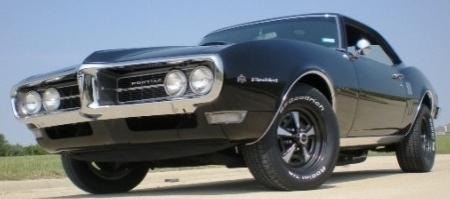 68 Firebird, trying a q-jet now. 434/10.5:1/997's/240-242 HFT/4L80E/2800 Yank/3.42's/ Vintage Air/ 13.0 @105 mph 70 Lemans, 350/350, A/C, mostly stock 14 Ram CC, 5.7 Hemi, 8-speed, 3.92 lsd 97 Trans Am, HPP Aug 2012 http://www.highperformancepontiac.co...tiac_trans_am/ ***Sold*** |
|
#71
10-20-2009, 11:57 AM
|
||||
|
||||
|
Quote:
I found the receipt for the cam but not the specs for it. But here is what i just found on the web: Part # - Advertised Dur - Dur @ .050 - Lift w 1.5 Rocker Arms - Lift w 1.65 Rocker Arms - Lobe Separation Angle - Intake Centerline H.O. HC-01D - 276/288 - 220/232 - .469/.497 - .516/.547 - 114 - 108 H.O. HC-01A - 276/288 - 222/232 - .465/.492 - .512/.542 - 114 - 109 According to Ken Crocie this cam should not have been installed with Rhodes Anti-pumpup lifters which i do have in there. Pulling the lifters out would mean just removing the intake/valley pan so not a big deal IMO. I also re-curved the advance on my rebuilt HEI dist (springs and weights) based on an article in Pontiac Enthuesiest back in the 90's. I may have way too much advance on it too but since it didn't ping or run-on, I thought all was ok. I hope I won't have to R&R the cam but if I need to..... I will. |
|
#72
10-23-2009, 01:56 PM
|
|||
|
|||
|
Paul hit something interesting. valve train noise. you should have some if you are running Rhoads. The comp. #s you are seeing would be avg. for an Hc-01 WITHOUT Rhoads. Typical 400 w/ Hc-01 and std lifters will idle @ 700-800 RPM with 16-18" vac. H-O offered 4 ways to convert to an adj. valve train: 3/8" self lock nuts with spacer washers, 3/8" poly locks that featured a machined relief to fit over the bottle neck, 7/16" poly locks with relief, and 7/16" poly locks w/ 7/16" screw in studs. Do Not change lifters doing so will probably ruin the cam. I suspect the idle is funky smelling because of lack of enough initial timing --a setting which is needed to run high C/R with a short seat duration cam. Lack of enough timing will cause the curb idle screw on the carb to be opened too far to provide good idle mix control--IE: running on the transfer(rich) slots.
__________________
GOOD IDEAS ARE OFTEN FOUND ABANDONED IN THE DUST OF PROCRASTINATION Last edited by KEN CROCIE; 10-23-2009 at 01:57 PM. Reason: mis spell |
|
#73
10-23-2009, 03:34 PM
|
||||
|
||||
|
Ken, thanks for the info.
I'm 99% sure I do have Rhodes lifters in there. As far as valve train noise goes, I have nothing to compare it to for saying it is noisy. My 2002 Dodge Ram 4.7L would not be a good comparison  I did notice that the spacer washers i put in there were getting bent up a little so I am taking them out. UPS delivered new 7/16" studs with correct Polylocks today and they will go in this weekend. I'm also going to picj up a vacuum gause to cehck the pressure. I did notice that the spacer washers i put in there were getting bent up a little so I am taking them out. UPS delivered new 7/16" studs with correct Polylocks today and they will go in this weekend. I'm also going to picj up a vacuum gause to cehck the pressure. I did notice that the idle mixture screws on the carb did nothing to the engine RPM like I would expect. I will also check the timing at different RPM levels and report back the numbers. If I took the car into an automotive performance shop, could they put it on an analyzer to find out the problem? Would they have to know Pontiac engines to diagnose correctly even on a machine? Thanks again. Last edited by madtexan; 10-23-2009 at 03:43 PM. Reason: mis typing |
|
#74
10-23-2009, 05:48 PM
|
||||
|
||||
|
Mike glad that you finally heard from Ken, and what he says makes sense.
With Rhoads lifters in there I was sort of expecting higher cranking compression numbers than you got (which is what I was actually a bit concerned about.) Also from what I understand you should definitely be able to hear them clicking- it shouldn't sound anything like your Dodge. Maybe they are adjusted way too tight so they can't leak down at low RPM like they are designed to do? (I am really reaching past my experience level here.) But then if you used the washers provide by HO for the cam then everything should be fine as is. Either way, interested in hearing whether adjusting it all back in changes anything. The timing advice is well worth exploring. Since vacuum advance can affect the total timing at idle the first step is to see how much timing you have at idle with and without the vacuum connected to the distributor. Walt
__________________
1969 Lemans vert, matador red, 462 CI, 3.07 12-bolt posi 1974 455 TA, admiralty blue/red interior HPP "cover car" - sold "The best way to show a car is to drive it" Last edited by PontGuy; 10-23-2009 at 05:50 PM. Reason: addition |
|
#75
10-23-2009, 07:24 PM
|
|||
|
|||
|
lack of response on the mix screws is an indication that the curb idle screw is far too open and energizing the transfer slots. A shop anylizer wont pick up the problem but an experienced tech may.
__________________
GOOD IDEAS ARE OFTEN FOUND ABANDONED IN THE DUST OF PROCRASTINATION |
|
#76
10-27-2009, 08:40 PM
|
||||
|
||||
|
OK, long time in between posts but this is what I've done:
purchased & installed 7/16" studs and poly locks. The rocker arm cover plates didn't fit anymore because the studs & poly locks are taller. Rotated the engine to TDC (0 deg) compression stroke. Adjusted the rocker arms/push rods to zero lash(no verticle play) and then took it 1/2 turn further. Held poly lock in place with a wrench and then tightened the hex screw on both intake and exhaust. Then moved the engine 90 deg clockwise and adjusted #8 cylinder same way. Then proceeded to rotate/adjust 4,3,6,5,7,2. Timing mark rotated around to TDC mark again on cylinder 6 and stopped 90 deg before when cylinder 2 was adjusted. So I think my rotation guess was pretty decent. Put valve covers back on and started car. This is how it runs now. There is a cylinder that occasionally misses pretty bad. When I put into drive it misses and car dies. I bumped the idle to 1000 rpm and it still dies when put into Drive.. Measured VACUUM off small port on intake manifold (near front) is giving 17 inches at 1000 rpm. When I increase engine speed it drops for an instant (normal I think) and then increases to 20. Measured TIMING ADVANCE Removed and plugged hose to HEI advance canister mechanical at 800rpm is ~15 and jumps to ~22 at 1400 rpm. Timing is very stable even at idle with no load on engine. Re-Installed vac advance hose to distributor vacuum advance 1000 rpm ~15, 1500 rpm ~20, 2000 rpm ~22, 2600 rpm ~25, 3200 rpm ~26. I tried hooking the timing light to each plug wire to see if I could tell which cylinder was causing the miss.... could not tell. There was no misfire before I replaced the rocker studs and re-adjusted the valves. It is so bad that when I put it in gear and it dies, it backfires thru the carb.... not real loudly though... just a sputter. GOOD POINTS: I do get a change in engine RPM when I adjust the carb idle mixture screws.... this had no effect before. I think I hear the lifters clicking. I measured one of the cylinder compressions (#1) and it was 200 psi peak. I was getting 170 on this cylinder before. Something changed here. Any Ideas? |
|
#77
10-27-2009, 10:35 PM
|
||||
|
||||
|
Wow, sounds like you did it exactly right and things went from not very good to very bad. Obviously something changed.
Are you positive that you were on the #1 compression stroke when you started the sequence, and not on #6 compression stroke? Even if this was wrong I would think the engine would probably run OK- just be very noisy. Have you checked to make sure all the wires are going to the right plugs? I would give the compression another check on the cylinders that you measured before. Maybe the Rhoads lifters were adjusted too tight before and that was allowing the combination to work. Check this link, and also take a look at their installation page. You may want to give them a call to see what they think about your combo. http://www.rhoadslifters.com/Pages/FAQs.html Not sure I understand the affect of the vacuum advance. When you hooked it up at idle did it stay at 15 or add 15 degrees to the base (30 total)? Walt
__________________
1969 Lemans vert, matador red, 462 CI, 3.07 12-bolt posi 1974 455 TA, admiralty blue/red interior HPP "cover car" - sold "The best way to show a car is to drive it" |
|
#78
10-28-2009, 08:58 AM
|
||||
|
||||
|
I'm absolutely positive I adjusted with the #1 TDC compression. Finger in hole and air pressure blowing by.
I marked all the wires when they were removed and installed in the same way. The vacuum advance was raw measurement with timing light. So in essence there was no vacuum advance at idle, just 15 deg of mechanical advance. I looked at the rhodes installation page: "If the intake manifold is installed before adjusting lifters and you cannot visually see the point at which the lifter plunger begins to compress below the retaining ring, it is best to determine this point by moving the pushrod up and down in a vertical movement while tightening the locknut until all looseness is removed and the pushrod can no longer be moved up and down with light pressure. DO NOT DETERMINE THIS POINT BY TWISTING THE PUSHROD IN YOUR FINGERS WHILE TIGHTENING. YOU WILL BOTTOM THE PLUNGER OUT BEFORE YOU FEEL ANY RESISTANCE WHICH WILL RESULT IN AN INCORRECT ADJUSTMENT AND POSSIBLE DAMAGE TO THE ENGINE" Maybe I need to back off my nuts by the half turn I gave them after the point of no play. |
|
#79
10-28-2009, 10:13 AM
|
||||
|
||||
|
Quote:
I do suggest that you try backing off some or use the instructions strictly.
__________________
My Wife: "I thought I married a sophisticated business man, but what I actually got was a redneck fisherman with muscle cars." Some people know all of their rights, but none of their obligations. |
|
#80
10-28-2009, 06:55 PM
|
|||
|
|||
|
Finger in the plug hole is NOT the way to determine #1 TDC. It can blow air on either stroke if the lifters are out if adj. You are @ #1 comp.when the TDC mark comes up and the intake valve is closing. Double check. Set the poly locks to zero lash and no more--for this trial. Then tighten the set screw till it contacts the top of the stud and then pull BOTH the Allen wrench AND box wrench together to tighten. Just running the set screw down will eventually loosen up.
__________________
GOOD IDEAS ARE OFTEN FOUND ABANDONED IN THE DUST OF PROCRASTINATION |
| Reply |
|
|
The PY Online Forums is the largest online gathering of Pontiac enthusiasts anywhere in the world. Founded in 1991, it was also the first online forum for people to gather and talk about their Pontiacs. Since then, it has become the mecca of Pontiac technical data and knowledge that no other place can surpass.




 Linear Mode

