


| FAQ |
| Members List |
| Social Groups |
| Calendar |
| Search |
| Today's Posts |
|
#21
 02-15-2011, 09:51 PM
|
||||
|
||||

BOBZDAR, forgot to mention tire size, I'm running 245/60/15s, 26.6" tall. I also have factory AC.
My reasoning for the 2.93 gears is not to save gas money, it's to keep RPM down, I go 60-65, it's pushing 3,000 RPM, that seems like a lot of needless wear and tear to me. 2.93s would reduce RPM by about 18%, or 1-(2.93/3.55). In looking at the 1970 sales brochure for the GTO/Grand Prix - the 2.93 was standard in the GP with the 400 with air and TH400. They obviously had a reason for this, was it because the GP was more of a highway cruiser than the GTO, whereas the GTO was built for the quarter-mile? My car left the factory with 3.23s because of the AC, I haven't a clue how it ended up with the 3.55s. I am so appreciative of everyone's comments and viewpoints - every comment makes me think about something I had not considered before, that's the purpose of the Forums, right? I'm just trying to lay everything out and think everything through, so I can come to a logical, sensible, decision. Yes, I do want to be safe, no, I don't want to push it to the limit and have to worry about detonation, etc. So, I don't want to be anywhere near 10 to 1. BOBZDAR suggests 8.5 to 1. BOBZDAR, I'm going to throw this out to everyone and see what their take is. The advantages seem clear, but what are the downsides?
__________________
REDGOAT 70 1970 GTO 400/350 TH400 |
|
#22
02-15-2011, 09:57 PM
|
||||
|
||||
|
I'd comment some on this.
But these sorta "what CR ?" threads rarely ever go anywhere worthwhile or productive.  One side says do this,other side says do that,neither side will budge an inch off their position,the battle lines are drawn,warning shots are fired back & forth. And eventually it ends up becoming an all-out p!ss!ng contest... It easy as can be to tell someone else to "do this". It's much harder to make sure that said fella does absolutely everything that will be needed to make such work as was intended. The difference is,,,there is zero risk involved in just telling someone to "do this"... And there is nothing but risk involved in actually doing such. I can tell ya'll to go jump off a building all day,see that's pretty easy,and it's absolutely no sweat off my back. But it's going to be a whole lot riskier for you guys to go out there and actually do such. Especially if I forget to remind you to use a parachute as well...  (please dont try this @ home kids) LOL Anyhow,if I were gonna build a 400 from the ground up with 74ish cc heads,at the minimum I'd probably be using the KB/Icon 14cc dished forgings myself.  Bret P. |
|
#23
02-15-2011, 10:10 PM
|
||||
|
||||
|
Quote:
__________________
 1968 Firebird 10.817/122.33 3600lbs trw 455, iron d-port heads/SD intake/q-jet, 9" tires 1.440 60ft 1968 Firebird 10.817/122.33 3600lbs trw 455, iron d-port heads/SD intake/q-jet, 9" tires 1.440 60ft1962 Catalina 4100lbs trw 455, iron d-ports,perf RPM, 800holley, 9'' tires,([email protected])1.578 60' Oct 2010!! 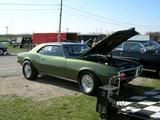 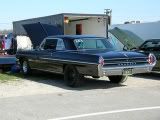 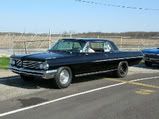 
|
|
#24
02-15-2011, 10:19 PM
|
||||
|
||||
|
What ^^^ he said.
Keeping the compression at 9.5 is perfectly fine for the stated use: Street car. You may give up 15-20 peak HP, but so what? Its a fun cruiser, not a performance street/strip car. Don't worry about overreving the 400. 3.23s would work great in your car. I run 3.90s and my 400 loves 3000-3500 RPM. Sucks gas though. The closer you run to 10:1, the more you have to bird-dog the tune. At 9.5 you can make a tuning mistake, discover it and change settings without much harm. At 10.5, a significant tuning mistake means you're sweeping your motor up with a broom. In my mind, the two schools of compression thought break down like this: The experienced tuners (and those builders with sharp customers) promote high compression because they're good enough to make it live and get big HP. The hobbyists with less experience (or more caution) or those that have to stand behind the warranty promote lower compression, because it will result in less come-backs and damaged engines. Anybody that is not a shark with engine tuning (or have one on speedial) should stay below 10:1 compression. Under 10:1 compression and a correctly chosen cam WILL live longer in the hands of a novice, IMHO. And whatever you do, please buy some good forged rods!! I can't tell you how many twisted/broken connecting rods I've seen come out of MILD engines.
__________________
I could explain all this to the girl at the parts store, but she'd probably call the asylum. White '67 LeMans 407/TH350/Ford 3.89... RIP Red '67 LeMans. 407/TH400/Ford 3.25 Last edited by chiphead; 02-15-2011 at 10:29 PM. |
|
#25
02-15-2011, 10:34 PM
|
||||
|
||||
|
I can vouch for a low SCR in an A-Body 400. I must have read many of the SCR threads. Bottom line, after many cam threads and talking to everyone, ended up with 8.2-8.5 SCR. 256/262 cam with a Four speed 3.11 first gear with 3.23's in the rear. I run 87 octane everywhere, car never goes higher than 195* in 100* weather and never pings. Plugs are nice and brown they way they are supposed to look. I reguarlly go through a right rear tire!!!
There a lot of benefits to low SCR. I could run any amount of timing I want!! I run 18* initial and I dare you to find a car that starts faster than mine with no choke!!! HTH, Dave
__________________
1967 Pontiac Tempest 2dr HRDTP Coupe 468 C.I. 500 HP 5 speed = FUN!!! 1990 Chevy Suburban R2500 Daily Driver 1986 Volvo DL245 Wagon.. Project car!!! The Burb Files |
|
#26
02-15-2011, 10:44 PM
|
||||
|
||||
|
Quote:
Lotta guys like to focus on the intake closing event,that's mostly because of it's prominence in DCR theory and such,but it aint as simple as that either. Wider LSA's tend to have later IC events,but not exclusively,that can also be affected by seat duration and installed centerlines as well. Remember that later intake events from a wider LSA generally also means earlier exhaust events too (this can be very important,and largely misunderstood). IMO,there is no one single feature of a cam that makes it "high compression" friendly,it takes a number of those features working together to make a cam like that,lots of seat duration,wide LSA for a later IC event (and thus earlier exhaust events too!),a decent I/E split to boost the lost overlap due to the wide LSA as that help exhaust scavenging initiate the intake charge,plenty of exhaust duration to help completely purge the exhaust charge before the intake valve actually opens,yadda,yadda,yadda. But cams can only do so much on their own,there are a lotta other details that go into making a successful high CR street combo. FWIW Bret P. |
|
#27
02-15-2011, 10:55 PM
|
|||
|
|||
|
X2 on Chipheads post. He covered most of what you need to know on there.
 To add one other thing-Hot, Humid climates tend to not be as "compression friendly" either, as Half Inch Stud reffered to. To add one other thing-Hot, Humid climates tend to not be as "compression friendly" either, as Half Inch Stud reffered to.
|
|
#28
02-15-2011, 11:07 PM
|
||||
|
||||
|
Thank you, Chiphead, well laid out post, bro! That's the conclusion I think I was coming to, but you get the credit for coming up with it first.
There are so many knowledgeable guys on the boards, their knowledge is amazing, but gee whiz, as soon as you guys get going on "performance" is when I get lost. I am just a novice, I need things explained in A B C terminology. I have a timing light from Kragen, and I think I have a spark plug wrench and a couple of rolls of friction tape in my tool box. That's about it. I do understand your connecting rod comment. I am now sold on forged rods.
__________________
REDGOAT 70 1970 GTO 400/350 TH400 |
|
#29
02-15-2011, 11:47 PM
|
||||
|
||||
|
Anyone out there that thinks a low CR combo automatically = a complete slug has probably never driven a well tuned dead stock 455 H-O equipped GTO or T/A in their life.
They'll easily run with most any of the similarly equipped "dead stock" high compression GTO's or T/A's that were available back then. Same wide LSA cams,along with the "same" most everything else for the most part,they just dropped the CR for the reduced fuel quality,the difference was like 25 "rated" hp between the '70 GTO 455 (360hp) and the '71 455 H-O GTO (335 hp),and honestly that was nothing that could'nt be recovered with just a little bit of careful tuning and such. And as someone else commented on,with todays less than perfect fuels,one can often be much more aggressive with the timing curve on that low compression 455 H-O combo vs. the '70 455 high compression combo. Honestly that '70 455 high compression ratio engine was severly undercammed by most hi-perf. folks standards. The '70 455 high compression engine used the 067 & 068 cam based on trans (AT/MT) The low compression 455 H-O also used the 068 cam. Even the low compression 455 SD used the 744 cam. So that '70 high compression 455 probably should've used the 041 cam w/1.5 rockers. But then they would have had to really "fudge the numbers" to get it past GM corporate. So ask me,it's more than just a wide LSA that dictates cam choice in any CR engine. It's only when you start building beyond what the factory built,and specifically choosing and selecting a specific parts combo for maximum gains that you'll typically be able to exploit all of these different options & areas of potential gain to maximum effect as guys like Cliff R. talk about all the time. And even then the results can vary somewhat on a case by case basis,like I said above the devil is definitely in the details,and not everyone gets all those details "just so" like others seem to be able to do with little to no effort. Often it's a matter of weighing any potential gains against the effort involved in doing such that tends to make some guys approach their CR choices in a more conservative manner. To many,a street car is'nt looking for every last .10 of ET or MPH. Once that sorta dynamic becomes the primary driving force for a build,most folks would suggest that it is a race car that's pretending to be a street car. To many a street car runs what it runs,it's more about having fun than running a number. FWIW Bret P. |
|
#30
02-15-2011, 11:54 PM
|
||||
|
||||
|
Gotta agree with Chip and 1967Tempest.
I'm running on 87 octane with my 400 4bbl 4speed and 3.55s, with a CR of 9.5 to 1. No ping or any other problem..... well a small overheating issue tho but that's all and it's not the engine's fault per say. It's that water pump problem that a lot of us are having. Tho it stays cool so far with a 160 thermostat.
__________________
 Gary Get in, ShuT Up, Hang On! Member of the Baltimore Built Brotherhood MY GTO built 4th Week of March 1966 "Crusin' Is Not A Crime" Keep yer stick on the ice. |
|
#31
02-16-2011, 02:58 AM
|
|||
|
|||
|
Everyone is talking about static compression..except for Cliff that mentioned a cam that was too good at filling a cylinder,everyone should really look at their cranking compression as one of the factors.My current engine is 180 to 185 psi and runs well on 87 octane with about 10.25 for static compression.
|
|
#32
02-16-2011, 05:43 AM
|
||||
|
||||
|
Quote:
IIRC your using the KRE-D aluminum heads so that has significant affect on that deal,as does most everything else. Comparing iron head combos and aluminum head combos in terms of static CR is pretty much comparing apples & oranges,especially when the aluminum heads in question have a far better & more modern combustion chamber design than the OE iron heads have. There are plenty of combos out there that will barely pump 140 psi and they'll still rattle their brains out,and there are other combos out there pump out over 200 psi,and they dont have even a hint of rattle,so there is no easy answer as to what will always work perfectly,and what wont ever work well @ all. Even when trying to copy other "known safe" combos the results can be a bit hit or miss for others who choose to try following that very same route. All it takes is missing one or two (or more) key details that the other guy took care of without even giving it a second thought. FWIW Bret P. |
|
#33
02-16-2011, 08:01 AM
|
||||
|
||||
|
You just have to figure out how the cam plays into this deal. At that point it becomes more about the actual compression (dynamic) that the engine sees and not about the static compression ratio.
If you don't take anything else away from this thread, remember my first response: "The cam is equally as important as the static compression ratio. The 9.5 to 1 limit we keep seeing regirgitated on this website is absolutely a retarded statement, IMHO." There is little if any difference between a 455 with a 204/214/112 cam in it with an 8 to 1 compression ratio than a 455 with a 234/244/112 cam in it at 10 to 1 compression. At least in terms of cranking compression, compression at low rpms (keep in mind here idle quality and low speed manners follow effective compression at low engine speeds) and the ability of that engine to effectively manage pump fuel on a daily basis. Sit back for a second and calculate the power production from each of those engines, and convince me the jump from 8 to 1 up to 10 to 1 compression is just worth 6 to 7 percent more power. Where folks screw this deal up is using a fast ramp cam ground on a tighter LSA, when they should have used a cam with more seat to seat timing, more overlap, and wider LSA instead. We continue to hear all about how the cam events play into this deal. Meaningless if you look at them on paper (static). You've got to figure the dynamics of the engine process into this deal. Another factor seldom if ever mentioned is engine RPM's. The N/A engine quickly looses is ability to fill the cylinders as the rpms increase. It will see the most cylinder pressure at or very close to peak torque. Choose a cam that pulls power down to lower rpm's, and narrows up the torque curve, and quess what? You've just dramatically increased the engines octane requirements and potential for detonation, all else being equal. When you carry an engine to the dyno, and it cranks out 550 ft lbs torque from the start of the pulls clear out past 5000rpm's, with a damn near flat torque curve, the octane requirements for that engine are less than a much less powerful (average power) engine pulling the torque curve down with a BIG spike in peak torque right in the mid-range. I see this ALL the time, and EXACTLY why the 455 brought to us to "tune" with the 9.5 to 1 CR and 224/230/110 HR camshaft was a TURD everyplace. It was WAY too good at cylinder filling at low rpms. We've built engines with higher compression and larger cams on wider LSA's with ZERO issues anyplace, and they made more power everywhere. Being an engine builder and DIRECTLY involved with tuning butt-loads of these engines, we've moved to even wider LSA cams and finding even better results. The next cam for my own engine will be bigger, and ground on a 114 LSA. I'm expecting little if any difference in idle quality, low speed manners, or low speed power. I do expect to makes some additional upper mid-range and top end power and not have the car slow down anyplace. Well, it's good thought, we'll see how it works when we get it installed and do some testing? As always, with this topic, we get PLENTY of theory, and great responses from folks who haven't built an engine in at least 10 years, or had a car running for at least 20. If you aren't out there building these engines, taking them to the dyno, then installing them in cars and street/track testing, well, your comments are mostly opinion(s), or information you've "Googled" up someplace, or cranked out of your desk top dyno with all the free time you've got that could have been put into actually building and testing one instead. Like everything else associated with this hobby, to really know what's going on with these things, at some point you've just got to get out from behind your keyboard and get your hands dirty....FWIW.....Cliff
__________________
If you can read this, thank a teacher. If you can read this in English, thank a Veteran! https://cliffshighperformance.com/ 73 Ventura, SOLD 455, 3740lbs, 11.30's at 120mph, 1977 Pontiac Q-jet, HO intake, HEI, 10" converter, 3.42 gears, DOT's, 7.20's at 96mph and still WAY under the roll bar rule. Best ET to date 7.18 at 97MPH (1/8th mile), |
|
#34
02-16-2011, 10:04 AM
|
|||
|
|||
|
Quote:
I've done this, went from 8:1 compression to 10:1 with everything else the same (unported d-ports) except I also went to a factory iron intake and picked up a measly 2mph in the 1/8 on my gtech. That translates to maybe 20hp (or roughly 5-6%)? The problem is with low compression engines people try to cram all the power in the low end so they have a ton of torque and then the engine is an absolute dog when it comes to actually making horsepower. Pontiac originally used the 041 cam in the sd455 with 8.4:1 compression, a full 2 points lower than it was used previously and didn't lose much power - maybe 20-30hp if you do the gross to net conversion vs. the raIV (raIV was 375net, SD was 310 gross). If they had put an 067 cam in, it would have been down 100hp or so and wasted all the extra flow of the SD heads. |
|
#35
02-16-2011, 10:35 AM
|
||||
|
||||
|
As far as low compression engines go, and I did cram everything into the getting power down low, what would be a dog?
Looking for some kind of baseline for what constitutes a dog or slug. Thanks, Dave
__________________
1967 Pontiac Tempest 2dr HRDTP Coupe 468 C.I. 500 HP 5 speed = FUN!!! 1990 Chevy Suburban R2500 Daily Driver 1986 Volvo DL245 Wagon.. Project car!!! The Burb Files |
|
#36
02-16-2011, 10:47 AM
|
||||
|
||||
|
To say because Pontiac used a wide lobe sep in their 10:1 motors they were designed for 87 or even 93 octane is way off, what was even regular leaded back in the 70s? I think Sunoco 260 was like 102 at the pump. A little different in a 10;1 than tghe ethanol 87 stuff you might get now.
__________________
Skip Fix 1978 Trans Am original owner 10.99 @ 124 pump gas 455 E heads, NO Bird ever! 1981 Black SE Trans Am stockish 6X 400ci, turbo 301 on a stand 1965 GTO 4 barrel 3 speed project 2004 GTO Pulse Red stock motor computer tune [email protected] 1964 Impala SS 409/470ci 600 HP stroker project 1979 Camaro IAII Edelbrock head 500" 695 HP 10.33@132 3595lbs 1964 Corvette Coupe 327 4 speed |
|
#37
02-16-2011, 10:53 AM
|
||||
|
||||
 More food for the fight. LOL.
I have had better ET's with tighter LSA then wider LSA's at the track.
 Don't know about dyno results. Never raced on one. LOL. |
|
#38
02-16-2011, 11:13 AM
|
|||
|
|||
|
Quote:
Performance wise it went from sub 90mph 1/4 to 100mph (at 3700lbs or so). So for me I guess it's a dog if it's below 90mph in the 1/4? For somebody running 11's at 115mph they would probably both be a dog. Maybe it's relative to the parts you're using - if you're using unported d-ports, 100mph is probably good, especially at 8:1 compression. If you're using aluminum heads, anything under 110mph in the 1/4 is probably a dog. If you don't care about 1/4 runs, then I guess if the car can't burn the tires or merge onto the highway with authority, it's a dog? |
|
#39
02-16-2011, 11:19 AM
|
||||
|
||||
|
I see. Cause my low SCR car pulls pretty hard for a heavy car with 200lbs of car stereo stuff and another 100-150 lbs of spare parts, tools, chairs etc for shows. Revs fast and never has an issue hitting the redline.
If I had a cam that was too big, would it take a really long time to rev and then take a long time to get going, similar to towing a car or very under powered? I ask only because I want to make sure that when I tune and build I make the right choices. Kinda part of learning how to do things the right way. Dave
__________________
1967 Pontiac Tempest 2dr HRDTP Coupe 468 C.I. 500 HP 5 speed = FUN!!! 1990 Chevy Suburban R2500 Daily Driver 1986 Volvo DL245 Wagon.. Project car!!! The Burb Files |
|
#40
02-16-2011, 11:26 AM
|
|||
|
|||
|
Quote:
Racing wise, a tighter lsa probably works well particularly if you're running a really narrow rpm range - which is Dude's area of expertise, so I think he would know. I know what's worked well for me and what hasn't - and I have 2 cars at 10:1 that will run fine on 93 octane and both have a wide lsa and are using factory parts similar to the OP, but then there's little margin for error. Based on my experience with a shorter duration, tighter lsa cam I know they would detonate themselves to death if that were the choice, I had to run 91 in an 8:1 engine with a small cam and it didn't run very well. This is why I suggested picking the compression ratio after the rest of the combination was thought out, as the cam can have an influence. It seems like for his purposes and parts a 10-15cc dish will be ideal so fuel quality won't be a concern as 2 or 3 people have suggested. You don't want to worry about it on a street car if you don't have to. I don't know that going lower than that would gain anything other than the ability to run cheaper gas, which wasn't mentioned as a concern. |
| Reply |
|
|
The PY Online Forums is the largest online gathering of Pontiac enthusiasts anywhere in the world. Founded in 1991, it was also the first online forum for people to gather and talk about their Pontiacs. Since then, it has become the mecca of Pontiac technical data and knowledge that no other place can surpass.




 Linear Mode

