| FAQ |
| Members List |
| Social Groups |
| Calendar |
| Search |
| Today's Posts |
![]() |
|
| THE LOBBY A gathering place. Introductions, sports, showin' off your ride, birthday-anniversary-milestone, achievements, family oriented humor. |
| Closed Thread |
|
|
Thread Tools | Display Modes |
|
#101
|
||||
|
||||
|
Problem is this younger generation cares nothing about cars, much less racing. Ever notice the large number of young women driving young men around these days? This would have NEVER happened back when we were young.
__________________
LEAD, FOLLOW, OR GET THE HE!! OUT OF THE WAY!!! HONEST JERRY'S SPEED AND EQUIPMENT
|
|
#102
|
||||
|
||||
|
Quote:
__________________
Cuz68 |
|
#103
|
|||
|
|||
|
I use to like watching , but thats when you had all the mgf.'s with there own cars. You had a race to see which real car could win. Now it's which copy of the copy of the copy thats running the corp. engine that that the same guy who built the same engine for the same copy of the same team gets to win this week because they spent the most money on the advertisements for the TV sponsor this week. All the cars are the same It's no fun watching a bunch of copy cats running. It's BORING, It's like watching an old HO race car set in your basement. OPP's another one fell off the track. No fun at all.
|
| The Following User Says Thank You to rexs73gto For This Useful Post: | ||
|
#104
|
||||
|
||||
|
So when the remnants of Chrysler get sold off and it no longer exists as an American Make what's NASCAR gonna do with only Chevy, FORD & TOYO?
KIA, TATA, Hyundai, Renault, and?..... |
|
#105
|
||||
|
||||
|
Quote:
In case you didn't realize it - Chrysler has already been sold off to Fiat and hasn't been in NASCAR since 2012. NASCAR still matters, and will continue to matter... |
|
#106
|
||||
|
||||
|
NASCAR and football matter in America just like F1 and soccer do in Europe.
|
|
#107
|
||||
|
||||
|
I miss watching NASCAR from the 60's to the mid 80's when the Pontiac's were real Pontiac bodies. I worked for PMD and was headquartered in the Jacksonville Zone from 1979-1983 then transferred to the Charlotte Zone, the heart of the NASCAR teams.
While in JAX, I got to attend several Daytona Races having MFG. credentials and roaming anywhere to watch the races. Pontiac supplied all of the courtesy cars to NASCAR Officials. When I was transferred to Charlotte, we would visit all of the shops using Pontiac's and meet their drivers. PMD supplied courtesy cars to the big name drivers, Richard Petty, Rusty Wallace, Cale Yarbourough, Neil Bonnet, Tim Richmond to name a few. Had the chance to see many of the races in that area and talk to the drivers. Racing was very interesting then, now it is totally boring. I am lucky if I watch the last 15-20 laps to see who wins. Like mentioned with the cookie cutter cars that are the same body with decals to look like Chevy, Fords, or Camry's. Now I prefer to watch the NHRA racing, as each round is different, loose a round and you are on the trailer till the next race, a lot more exciting IMO. I miss the good old days, always wondered why the older folks said this while I was growing up, now I know what they meant.
|
|
#108
|
||||
|
||||
|
Watching NASCAR or Football is just the same as watching Wrestling.
|
|
#109
|
||||
|
||||
|
Quote:
Question two: with what make of car??? ![]() ![]() ![]() Jon.
__________________
"Good carburetion is fuelish hot air". ![]() "The most expensive carburetor is the wrong one given to you by your neighbor". If you truly believe that "one size fits all" try walking a mile in your spouse's shoes! Owner of The Carburetor Shop, LLC (of Missouri). Current caretaker of the remains of Stromberg Caburetor, and custodian of the existing Carter and Kingston carburetor drawings. |
|
#110
|
|||
|
|||
|
Jaguar. 3 of the top 5 were won by a JAGUAR.
__________________
“It takes considerable knowledge just to realize the extent of your own ignorance.” Dr. Thomas Sowell |
|
#111
|
||||
|
||||
|
When I was a kid it was amazing.
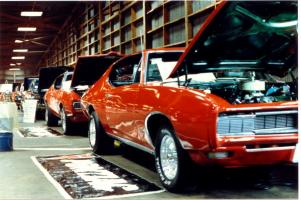
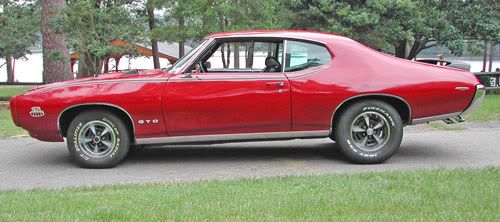
Daytonas and Superbirds in the showrooms to make them race cars. Real cars that looked like real models. Even TA/SCCA had real looking models. It was awesome. Then all the homo, pansy, draft dodging, crap car driving boomers ruined things for others of their generation and those that followed. I doubt anyone that bought a GTO new when he graduated from high school grew up wanting a society that drugged its boys into submission in school, gave everyone a trophy for showing up, etc.
__________________
"Yes, it's a real GTO. I know the scoops, spoiler, exhaust tips, and rear wheels are wrong. Umm, sure it's the 'big block' 400, you are quite the expert. I am driving in the rain, at night, running errands, with the kids who are eating and having ice cream in the back, after going to the drag strip, burning rubber, and blowing donuts. Do you really think it's numbers matching all original?"
|
|
#112
|
||||
|
||||
|
ya, they all got DUIs
__________________
___________________________________________ the more im around people, the more i like my dogs |
|
#113
|
|||
|
|||
|
More than likely. That or they NEVER learned to drive because they couldn't put the X-box down.
__________________
“It takes considerable knowledge just to realize the extent of your own ignorance.” Dr. Thomas Sowell |
|
#114
|
||||
|
||||
|
Quote:
__________________
___________________________________________ the more im around people, the more i like my dogs |
|
#115
|
||||
|
||||
|
Originally Posted by Nomadac
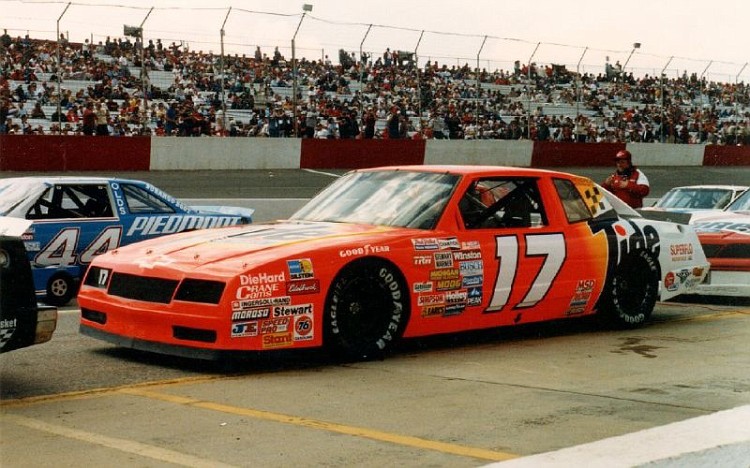
I miss watching NASCAR from the 60's to the mid 80's when the Pontiac's were real Pontiac bodies I miss the good old days, always wondered why the older folks said this while I was growing up, now I know what they meant. ![]() Anyone that thought that Cup cars were derived from stock showroom cars needs to read this article. The cars were going away from showroom cars in the mid 60s and the progression continues until today. Street Legal TV: How long were stock style factory frames used in NASCAR? Banjo Matthews (right) with Fireball Roberts. Image: Pontiac High PerformanceBuz McKim: For the most part, stock bodies and frames were used in NASCAR until the 1967 Ford Fairlane, which was a unibody car. Beams were used to tie the front and rear subframes together which made it far safer and gave much more secure points to mount the roll cage. After that, things slowly evolved into rolling race chassis. The stock front clip of the car was used into the early 1970’s but the remainder of the car was fabricated. Most race teams were doing their own rear frame clip which allowed them to put their springs in different locations to get them to work, and I don’t think NASCAR was real rigid on that sort of thing back then. It gave the builders a lot more flexibility. They could modify the A-Frame locations as well. SLTV: Just from a visual point of view, it looks like the cars wore stock bodies well into the 1970′s. How long did stock cars utizile factory sheet metal? Buz: Well, even up into the 1980’s they strongly resembled the factory version. If you look at the ’85 Thunderbird that Bill Elliot ran, or the ’86 Monte Carlo that guys like Earnhardt ran, the car still very much resembled the factory version. It was probably in the early ‘90’s that they really went away from looking like the factory car. At that point the only thing matching a stock factory body piece was the roof and the hood. Everything else was completely hand fabricated. In fact, until 2003, the hood, roof, and decklid were still required to be identical to their stock counterparts. What really changed things body-wise was the ’83 T-Bird, because it was the beginning of the super aerodynamic cars we know of now. It’s a very round car with very few flat panels. Up until 1990 or so, teams would get “white” bodies from the manufacturers and use the quarter panels, roof, A-pillars, hood, and then fabricate everything else. Interestingly enough, I have a quarter panel from one of the cars used in the 1990 movie, “Days of Thunder.” The gauge of the metal used in 1990 was far thicker than the cars that are run today, which are as thin as lunch meat wrappers! It’s just an example of technology moving forward. Richard Petty working on a Torino for the 1970 year of NASCAR. It would never be used as Petty switched to back Plymouth before the end of 1969.Up until when the “Car of Tomorrow” came in 2007, the cars were getting out of control. They were twisted, offset, and looked nothing like the factory version. One of the things NASCAR hoped to do with the “Car of Tomorrow” was to get it looking more like its factory counterpart. If you look at the Nationwide series at the new Challenger, it’s a car that quite closely resembles a stock Challenger body-wise. NASCAR hopes to continue that because one of their worries is that fan interest may have waned a bit due to the fact that the cars couldn’t be identified easily. SLTV: When did the factory engine size restriction leave NASCAR? We recall seeing Dodge Chargers with “426cui” printed on the hood, but today the showroom version of most stock cars is a small fuel injected V6.Buz: That all really came about around 1973 or 1974. It was kind of in conjunction with the oil crisis and that Detroit was starting to downsize their engines. So NASCAR, like in 1981 when they downsized their car to a 110-inch wheelbase, they were just in line with what Detroit was doing. It was standardized at 358 cubic inches and had a carburetor, and that’s what it is today. SLTV: You mentioned that the 110-inch wheelbase was mandated in 1981. What was it before then? Buz: Prior to 1981, I believe it was 115-inches, which is what most cars were then anyway. There was actually a range used at one point to allow for the different sizes of cars to fit into it since the wheelbase could not be altered from the factory dimension. SLTV: When did the factory-style suspensions leave NASCAR? They’re all running coil springs in front now with truck arms and coil springs in the back. Buz: Well, I can’t say for sure, but in the 1960’s you still had to use factory suspension, torsion bars, leaf springs, etc., but could add as many leaves as they wanted, move the shackles, etc. When GM went to coil springs, it really threw people off as they had no experience with rear coil springs. It gave them a lot more to play with as far as tuning goes. The Mopar guys complained quite a bit about trying to get torsion bars to work on road courses! ![]() SLTV: When did purpose-built race chassis enter NASCAR? Buz: Well, that really all started with Banjo Matthews, somewhere around 1970. He purchased a chassis jig from Ralph Moody and went out and made a ton of money building cars with it. Almost every car that won in the 1970′s had one of his chassis. I once asked Ralph Moody about it and he joked with me saying, “I did sell a jig to Banjo, but I didn’t sell him my good one!” Why were Banjo’s chassis so popular? What set them apart from everyone else? Cars built by Matthews had won 262 of 362 NASCAR Winston Cup races from 1974-1985, including all 30 races in 1978, and four consecutive Winston Cup championships (1975-78). Statistics like that are no accident! We found this over on LegendsOfNASCAR.com: “In 1963, [Matthews] left the driving to others, joining the Ford factory team building cars for Parnelli Jones, A. J. Foyt, Donnie Allison, Pete Hamilton and Bobby Isaac. When the factories pulled out, Banjo opened his own shop, and the legend began. He made a deal with John Holman of Holman-Moody, and built kit-type Fords in 1971.“Matthews built the body and framework, and H-M put in the motors. After that, he built cars for Chevrolet, and then later for others from his own shop. Cars built by Matthews won 262 of 362 NASCAR Winston Cup races from 1974-1985, including all 30 races in 1978, and four consecutive Winston Cup championships (1975-78). On many occasions, cars built by Banjo Matthews comprised over half the field.” “The basic construction of a car is not what wins races,” Matthews said in a 1980 interview. “It’s the team effort after the car leaves our facility that separates the winners and losers. We strive to build our cars as good for one customer as we do for another. The credit for their performance goes to the people who operate them. I get my kicks, and so do my employees, from how well cars that we have built perform and the satisfaction they bring to the customers. That’s all the recognition I care about.” Darrel Waltrip's '86 Monte Carlo![]() Because of this, it’s easy to believe that the father of the modern stock car chassis – and maybe modern stock car racing itself – is none other than Banjo Matthews. After interviewing Buz McKim and learning more about Banjo Matthews, it would appear that innovators like Banjo, not NASCAR, are perhaps the reason NASCAR stock cars look like they do today. It appears to have been a complete evolution of innovation within the confines of a racing series. People like Banjo, Smokey Yunick, and others who really could think outside the box and were set on building the fastest, safest, most innovative race cars they could within the confines of the rules, or more specifically, in the areas of the rules that were not clearly defined. So, when it’s all said and done, the reason that “Stock Cars” no longer roll in NASCAR is a complex one, and certainly one that didn’t happen overnight. We love the racing we see on the track today, certainly, but the gearheads in us still pine for the day when stock cars wore real sheet metal and had a little more in common chassis-wise with their showroom counterpart. Sure, we now now that even those cars weren’t really “stock” anyway, but they sure looked cool.
__________________
Brad Yost 1973 T/A (SOLD) 2005 GTO 1984 Grand Prix 100% Pontiacs in my driveway!!! What's in your driveway? If you don't take some of the RACETRACK home with you, Ya got cheated ![]() ![]() ![]()
Last edited by Sirrotica; 03-05-2014 at 06:39 PM. |
|
#116
|
||||
|
||||
|
Quote:
Although I am not a fan of foreign nameplates early on it was not uncommon for their cars to enter and sometimes win NASCAR events. The difference being there was no factory support so the people running them slowly went to where the money was, US manufacturers. Also the cubic inch race was on with domestic manufacturers and there were no foreign big V8s. All the uproar about Toyota running cup cars was done many years ago, it ain't news. Here's a little history about foreign nameplates racing in NASCAR. That honor actually goes to Jaguar. The late Al Keller piloted a Paul Whiteman owned Jag to victory in NASCAR’s first ever road race, held on June 13, 1954 at Linden Airport in Linden, New Jersey. Keller outdistanced Joe Eubanks in a 1951 Hudson to record the second and final win of his NASCAR career. What you have to understand is that, back in the 50s, Big Bill France wasn’t necessarily opposed to having foreign makes run on the big circuit. If you look through the records, you’ll see that, on more than one occasion, there were events run with these cars in the field. In the first race at the famed Riverside Raceway, a road course, in California, several foreign makes turned up in the rundown. While the top 17 finishers were all American made iron, the results show a pair of French built Citroens finishing 18th and 19th, piloted by Bill Jones and Ralph Roberts, respectively. Then a little further back is a Renault driven by Hylan Micka. So the foreign car make roots go a lot further back. But perhaps the neatest of all the foreign cars known to have competed in NASCAR’s top series was in an event at Langhorne Speedway in Pennsylvania. In that event, held on June 21, 1953, Philadelphia native Dick Hagey entered a Volkswagen Beetle in the event. Hagey’s number 18 VW qualified 32nd in the 38 car field, and putted right along in the 200 lap event to finish 19th. That’s not too bad for a little car equipped with a four-cylinder engine that produced less than 40 horsepower! It was the only Cup event for Hagey, and to date is the only time a VW Beetle has competed on NASCAR’s top circuit (unless you count Herbie The Love Bug in that movie from a few years back). On a side note, according to an interview at Racer’s Reunion.com, veteran Goody’s Dash driver Horace Long says he campaigned a #77 VW Beetle in the four cylinder series for two years, and was the only one to race one of the little cars on the circuit.

__________________
Brad Yost 1973 T/A (SOLD) 2005 GTO 1984 Grand Prix 100% Pontiacs in my driveway!!! What's in your driveway? If you don't take some of the RACETRACK home with you, Ya got cheated ![]() ![]() ![]()
|
|
#117
|
||||
|
||||
|
Brad, thanks for that info about the evolution of the "stock" car, very good.
|
|
#118
|
||||
|
||||
|
Quote:
That's why I don't care or watch, they're not real cars, just cookie cutter fabrications. Hey...NASCAR can just order next seasons cars from China, just pick you decals!
__________________
1974 Formula 400 "retired", parts car now.
|
|
#119
|
||||
|
||||
|
Quote:
Obviously you didn't read the article where it states that the hero innovators of the day, Smokey Yunick and Banjo Mattews, Holman Moody etc. are the reason that the cars evolved from showroom cars into purpose built dedicated 100% race cars. NASCAR isn't who started changing the cars. The innovators that you guys go on and on about in these threads were primarily responsible because they wanted their cars to be faster, safer, and more innovative cars than their competition. Your blame is in the wrong place.
__________________
Brad Yost 1973 T/A (SOLD) 2005 GTO 1984 Grand Prix 100% Pontiacs in my driveway!!! What's in your driveway? If you don't take some of the RACETRACK home with you, Ya got cheated ![]() ![]() ![]()
|
|
#120
|
||||
|
||||
|
Sirrotica,
Nope, sorry didn't read anything past the guy I quoted, no need to because I have no interest in today's NASCAR regardless of how it evolved. It is what it is now. Great drivers I'm sure but they lost me and many others a long time ago, I'd rather head to my local dirt track, far more exciting stuff going on there.
__________________
1974 Formula 400 "retired", parts car now.
|
| Closed Thread |
|
|